Next-Generation Technologies
Geothermal Beyond the Constraints of Subsurface Fluids: Technology Trends in Closed-Loop Geothermal and Prospects for Deployment in Japan Markets
SHARE


—Multilateral and Coaxial Designs, the Technology Strategies of Three Overseas Companies, and Long-Term Thermal Performance in Hot-Spring Regions—
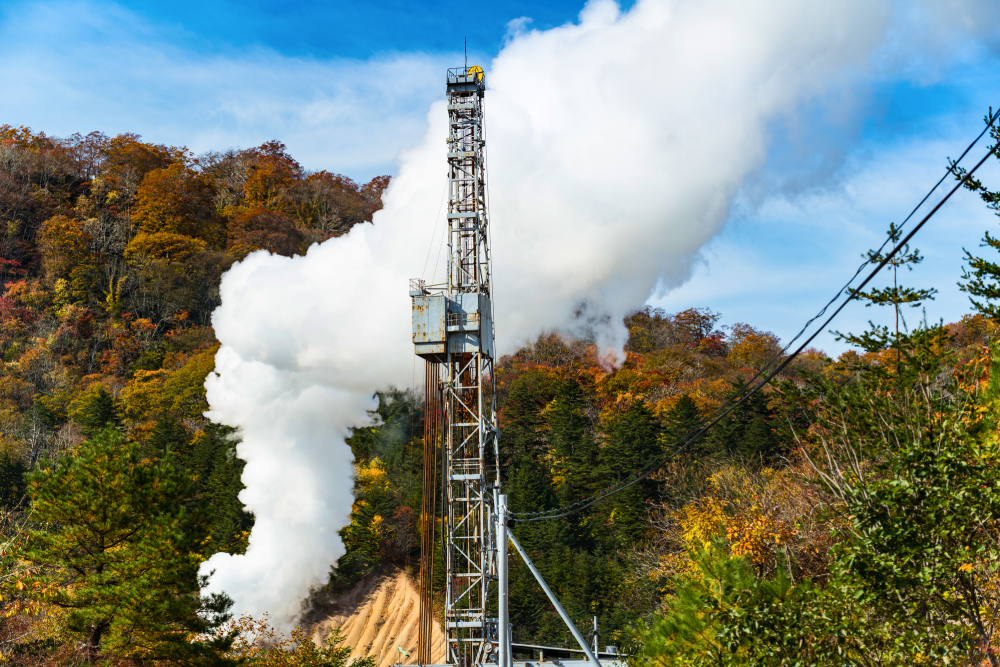
The suitability of a site for geothermal power generation has never been determined by subsurface heat alone. Conventional development requires steam or hot water to transport that heat, together with a highly permeable reservoir capable of conveying the fluid to production wells. Even when drilling encounters high-temperature rock, a project is unlikely to be viable without sufficient flow. Conversely, even where a productive hydrothermal system exists, coordination with hot-spring operators, reinjection capacity, and measures to control scaling and corrosion can dictate both development schedules and costs. Dependence on this triad of heat, fluid, and reservoir has been the fundamental constraint preventing geothermal deployment from expanding despite its promise as a source of firm power.
Closed-loop technology seeks to change this premise. It creates an engineered, sealed flow path underground, circulates a working fluid exclusively within that circuit, and receives heat from the surrounding rock through the wellbore wall and piping. Because no formation fluid is produced and, in principle, no working fluid is injected into the formation, the resource can be engineered as a combination of rock temperature, thermal conductivity, well length, flow rate, and fluid properties rather than being defined by fluid productivity. Companies pursue different technical strategies—including multilateral configurations that expand the geometry of the subsurface heat exchanger, coaxial designs that create supply and return paths within a single well, and approaches that use materials to enhance heat conduction around the well—but all share the objective of reducing dependence on the happenstance availability of subsurface fluids.
This characteristic is particularly important in Japan, where coexistence with hot-spring resources is essential. Closed-loop systems can more readily avoid hydraulic impacts on groundwater levels and spring temperatures, while potentially extending development options to low-permeability hot rock and existing wells previously regarded as insufficiently productive. A Closed-loop, however, does not provide unlimited heat. If heat is extracted at the surface faster than it can be replenished around the well through conduction in the rock, temperatures near the wellbore will decline, making it impossible to sustain the same level of heat recovery over the long term. The drilling cost of long and complex wells, pressure losses, insulation, material durability, and safety in the event of leakage also create new commercial risks. Closed-loop geothermal should therefore be viewed not as a technology that eliminates resource risk, but as one that converts it into an engineering risk that can be forecast and managed.
This article first traces the history of coaxial closed-loop research in Japan, then examines three companies—Eavor Technologies, XGS Energy, and GreenFire Energy—to clarify the distinctions among designs that maximize heat-transfer area, materials technologies that increase heat flux, and retrofit models that revitalize existing wells. In addition to water, the most common circulating fluid, it considers supercritical carbon dioxide, which has been tested in closed-loops; organic working fluids; and the potential use of molten salts for ultra-high-temperature rock. Research on supercritical carbon dioxide has focused primarily on CO₂-EGS, in which CO₂ flows through subsurface fractures and reservoirs; this must be distinguished from closed-loop applications that circulate CO₂ only within sealed piping. The evaluation therefore looks beyond maximum temperatures or short-term peak output to overall deployability, including thermal decline over decades, auxiliary power requirements, environmental and safety impacts in the event of leakage, maintainability, domestic regulation, and supply-chain readiness.
Contents
Japan’s Development History—From Early Coaxial Research to Policy-Backed Demonstration
Research on closed-loop geothermal systems in Japan did not begin only recently. Heat-extraction experiments using high-temperature boreholes were conducted as early as 1981, followed by research on downhole coaxial heat exchangers (DCHEs) at the former National Research Institute for Pollution and Resources, now the National Institute of Advanced Industrial Science and Technology. A proof-of-concept test was carried out in Hawaii in 1991, and pressurized-water circulation tests in double-pipe wells were also conducted in Oita Prefecture. These projects were based on the concept of sending fluid down and back through a single well—the same principle underlying today’s coaxial systems. In fiscal years 2021 and 2022, JOGMEC assessed the technical and economic viability of closed-loop systems and published its findings in 2023. In 2026, the NEDO Green Innovation Fund set out an integrated development program covering test-well drilling for multilateral and coaxial designs, circulation testing, the sustainability of heat recovery, and reductions in drilling costs. Japan’s focus is thus shifting from component-level research to field demonstrations with commercial relevance.
Two Fundamental Configurations—Multilateral and Coaxial
| Criterion | Multilateral System | Coaxial System |
|---|---|---|
| Configuration | Multiple horizontal or deviated laterals branch from and connect two main wells or similar well pairs, forming a large subsurface heat exchanger. | An inner and outer pipe are installed in a single well, with the working fluid traveling down one passage and returning through the other. |
| Heat-transfer area | Well length can be expanded substantially, making the design suitable for large-scale projects. | Area per well is limited, but the configuration is comparatively simple. |
| Construction priorities | Long-reach directional drilling, branching, well intersection and connection, and flow distribution | Insulated inner pipe, annular flow path, well diameter, pressure loss, and retrofit execution |
| Applications | New, large-scale heat and power projects | Reuse of existing wells, small-scale or phased development, and life extension of steam wells |
| Principal risks | Drilling cost, integrity of complex wells, and uneven flow among laterals | Limited heat-transfer area, thermal short-circuiting between downflow and upflow, and lower output |
Eavor Technologies—Turning the Well into a Subsurface “Radiator”
Eavor Technologies’ Eavor-Loop is a multilateral system in which multiple lateral wellbores extend from two main wells. The working fluid absorbs heat from the surrounding rock within a sealed circuit and is designed to circulate through a thermosiphon effect driven by temperature and density differences. Eavor began operating Eavor-Lite in Alberta, Canada, in 2019. At a depth of approximately 2.4 kilometers, the project connected two horizontal sections and demonstrated well intersection, leakage control, thermal-performance forecasting, and load-following operation. Commercialization efforts have since shifted to Geretsried, Germany, where deeper wells and numerous laterals are being used for combined heat and power production. The system’s strengths are the scalability of its heat-transfer area and the predictability of output independent of subsurface fluids. Its drawback is that accurately drilling, connecting, and sealing multiple long, high-temperature wells drives up capital costs; success therefore depends on improving drilling efficiency and standardization through learning effects.
XGS Energy—Increasing Heat Flux through a Single-Well Design and Materials Engineering
XGS Energy employs a modular system featuring a pipe-in-pipe heat exchanger installed in a single well. Water descends through the outer flow path, is heated near the bottom of the well, and returns to the surface through an insulated inner pipe. The company’s distinctive feature is its Thermal Reach Enhancement (TRE) technology, which places highly conductive materials around the wellbore. This materials-engineering approach enhances heat transfer from the rock to the well and is intended to overcome the limited heat flux inherent in coaxial designs. The system can be expanded one well at a time, consumes no groundwater, and is largely independent of permeability. However, the long-term stability of the materials, construction quality, and degradation of interfaces under thermal cycling must still be validated under field conditions. Its technical philosophy is less about “adding wells to gain area” than about “increasing heat transfer per well.”
GreenFire Energy—GreenLoop and the Reuse of Existing Wells
GreenFire Energy’s GreenLoop is centered on a coaxial downhole heat exchanger and selects the working fluid and system design to suit conditions ranging from retrofits of existing geothermal and oil and gas wells to new wells and liquid- or vapor-dominated resources. In its 2019 demonstration at Coso, California, GreenFire installed an approximately 330-meter downhole heat exchanger in an existing geothermal well and circulated both water and supercritical CO₂, separately, through the sealed circuit. The supercritical CO₂ test confirmed thermosiphon circulation; however, geothermal steam was co-produced outside the heat exchanger at varying flow rates during the test. It therefore did not demonstrate a large-scale commercial closed-loop system recovering heat solely by conduction from hot dry rock. The commercial advantage lies in repurposing idle or underperforming wells and using existing wellheads, roads, and transmission infrastructure to reduce upfront investment and development time. In 2025, GreenFire announced a collaboration with Toyo Engineering to pursue joint deployment in the Asia-Pacific region, with site screening and commercialization studies under way in Japan and Indonesia. Its ability to enter the market through asset renewal in established geothermal fields, rather than through large greenfield projects, gives it a strong potential fit with Japan.
Selecting the Working Fluid—Water, Supercritical CO₂, Organic Fluids, and Molten Salts
Closed-loop systems can use an engineered working fluid selected independently of subsurface fluids. This freedom is a major design variable. Water remains the principal medium in commercial and demonstration projects, but supercritical CO₂ and low-boiling organic fluids may be candidates depending on temperature and pressure, the feasibility of natural circulation, and the interface with surface power-generation equipment. Concepts have also been proposed for using molten salts as subsurface heat-transfer and storage media in ultra-hot rock above 400°C. The choice, however, is not as simple as assuming that a higher specific heat is always preferable. It must account for thermosiphon behavior driven by density differences, pumping power associated with viscosity, phase change, material compatibility, freezing or solidification, leakage safety, and the surface power cycle.
| Fluid | Expected Advantages | Key Constraints and Considerations |
|---|---|---|
| Water | High specific heat, low cost, ready availability, extensive thermophysical data, and proven equipment | High-temperature and high-pressure operation, boiling control, corrosion, and freezing in cold climates; pumping loads may be substantial under lower-temperature conditions |
| Supercritical CO₂ | In sealed circuits, low viscosity and density differences may support thermosiphon circulation; demonstrated in a downhole heat exchanger installed in an existing geothermal well | Most research concerns CO₂-EGS; closed-loop demonstrations remain limited; requires high-pressure equipment, robust seals, and leakage and depressurization management |
| Organic fluids (pentane, isobutane, etc.) | Low boiling points may enable a direct power cycle from low- to medium-temperature resources, potentially eliminating the surface heat exchanger | Flammability, environmental impacts, stringent leak prevention, and explosion-proof equipment; complex phase-state control throughout a deep well |
| Water-glycol mixtures and similar fluids | Established use in shallow and cold-climate heat applications requiring freeze protection | Higher pumping power and reduced thermal performance as viscosity rises, plus decomposition at elevated temperatures |
| Molten salts | Low vapor pressure at high temperatures and substantial sensible-heat transport capacity; well suited to output smoothing and time shifting when coupled with surface thermal storage | High solidification temperature requires insulation and heating throughout the circuit even during shutdown; corrosion, chemical stability, deep-well startup and maintenance, and added weight remain challenges |
Supercritical CO₂: Research on supercritical CO₂ in geothermal applications has focused primarily on CO₂-EGS, in which CO₂ is injected into engineered fractures or subsurface reservoirs and brought into direct contact with the rock to recover heat. In a closed-loop system, by contrast, CO₂ circulates only inside sealed downhole piping and is not injected into the formation. Its lower viscosity and temperature-dependent density changes may make thermosiphon circulation easier to establish than with water, but comparisons must also account for volumetric heat-carrying capacity, required pressures, and sealing performance. At GreenFire’s Coso demonstration, supercritical CO₂ circulated through the sealed circuit of an approximately 330-meter coaxial downhole heat exchanger installed in an existing geothermal well, and continuous pump-free circulation was confirmed after initial charging. As noted above, however, geothermal steam was co-produced outside the heat exchanger during the test; this was not a demonstration of a commercial system generating power over the long term solely through conductive heat recovery from hot dry rock. Findings from CO₂-EGS research therefore cannot be treated directly as evidence of closed-loop performance.
Organic fluids: Circulating low-boiling fluids such as n-pentane, cyclopentane, isopentane, or isobutane directly from the well could allow the produced fluid to be sent from the wellhead straight to a power turbine, potentially eliminating the surface heat exchanger between the circulating water and the ORC fluid. Reducing the number of heat-exchange stages can lower both temperature-difference losses and equipment costs. Yet sealing a flammable fluid inside kilometers of underground piping requires a cautious risk assessment even if the probability of leakage is low. Deployment in Japan would require an integrated safety case spanning high-pressure-gas regulation, explosion protection, fire safety, and well integrity. Ammonia and refrigerants may also merit thermodynamic consideration, but toxicity, environmental regulation, and material compatibility are likely to limit their use in deep closed-loop systems.
Molten salts: Nitrate- and chloride-based molten salts maintain low vapor pressure at high temperatures and have an established track record as heat-transfer and storage media in concentrating solar power (CSP). In closed-loop geothermal systems, heat recovered from ultra-hot rock could be carried in the same medium to a surface storage tank and dispatched for power generation during periods of demand. If the salt can serve as a “thermal buffer,” with operations aligned to both heat replenishment from the rock and grid demand rather than continuously maximizing extraction, it may mitigate temperature decline under steady operation and convert part of the installation’s value into capacity value.
At present, however, molten salt is not a standard fluid for conventional deep closed-loop systems; it remains largely the subject of research, patents, and conceptual designs targeting ultra-high-temperature conditions. The principal concern is solidification. Even nitrate salts will freeze below their melting point, and a blockage several kilometers underground would be difficult to remediate. Startup preheating, heat tracing during shutdown, emergency drainage, and salt-resistant pumps, valves, and seals must be designed as an integrated system. Chloride salts can potentially operate at higher temperatures but are highly corrosive, increasing the cost of nickel-based alloys and protective coatings. A pragmatic path for Japan would therefore be to validate materials, freeze prevention, and thermal-cycle durability first in high-temperature test facilities and short-loop systems, while reserving the technology for ultra-hot sites where water-based systems are unlikely to realize the full resource value.
Prospects for the Japanese Market—Coexistence with Hot-Spring Resources
The principal reason closed-loop geothermal is attracting attention in Japan is that it neither extracts subsurface steam or hot water nor injects working fluid into the formation, thereby reducing the main pathways through which development can affect groundwater levels, spring discharge, temperature, and chemistry in hot-spring zones. Systems that do not rely on hydraulic stimulation can also more readily limit the risk of induced seismicity associated with pressure propagation. This creates scope to reassess heat sources near hot-spring districts, low-permeability hot rock, and areas around existing wells—locations where conventional development decisions have been difficult. A closed pipe, however, does not mean zero impact. Lost circulation during drilling, intersections with faults or aquifers, damage to casing or cement, drilling vibration, surface facilities, and construction water must each be managed separately. Coexistence with hot springs must be demonstrated not by the name of the system, but through well integrity, groundwater monitoring, baseline surveys, and defined shutdown criteria for abnormal conditions.
A Critical Challenge—Declining Heat Recovery under Continuous Operation
Closed-loop output declines when heat is extracted faster than it can be replenished from the rock around the wellbore. High outlet temperatures may be achieved initially by drawing on heat stored near the well, but as continuous operation expands the cooled zone, outlet temperature and generation efficiency fall even at the same flow rate. This differs from reservoir depletion caused by fluid loss, yet the commercial effect is similar. Mitigation measures include: (1) increasing lateral length and number to secure more heat-transfer area; (2) widening well spacing to avoid thermal interference; (3) optimizing flow rates; (4) reducing output at night or seasonally to allow thermal recovery; and (5) combining power generation with district or industrial heat use to exploit lower-temperature energy. The key metric is not initial peak output, but net output after accounting for the 20- to 30-year temperature-decline curve, auxiliary power, and capacity factor.
Measures Required for Commercial Viability in Japan
First, select the system on a site-specific basis: The choice of configuration is determined not by a simple ranking of technologies, but by the combination of subsurface conditions, existing assets, required output, and acceptable upfront investment. Where extensive hot rock supports long-reach directional drilling and coordinated construction of multiple wells, a multilateral system can provide a large heat-transfer area. Unless lateral drilling and connection accuracy, flow distribution, and thermal interference are assessed in advance, however, additional well length will not necessarily translate into effective heat-recovery area. Coaxial systems are easier to deploy where existing geothermal or exploration wells can be reused or where investment is to be staged one well at a time as demand grows, but thermal short-circuiting between inner and outer pipes, pressure loss, and low output per well remain constraints. The alternatives should therefore be compared on common assumptions—including geothermal gradient, rock thermal conductivity, well diameter, existing-well integrity, site constraints, and heat demand—using long-term net output and life-cycle cost.
Second, place drilling costs at the center of policy support: Closed-loop systems reduce the productivity risk associated with subsurface fluids, but require substantial expenditure before completion on long wells, multilateral junctions, well connections, high-temperature casing and cement, and insulated inner pipes. First-of-a-kind projects also lack a domestic track record in drilling speed, bit life, trajectory control, lost circulation, and well integrity, making technical risk difficult to price. Policy support should therefore extend beyond subsidies tied to post-completion generation and prioritize test wells, long-duration circulation tests, diagnostics of existing wells, shared data acquisition, and partial coverage of unsuccessful wells. Sharing drilling data and cost breakdowns across projects would allow standard well designs, equipment procurement, and permitting procedures to be repeated, enabling learning effects through regional drilling campaigns. Public support should not permanently underwrite individual projects; it should socialize first-of-a-kind risk and help the private sector establish a reproducible cost curve.
Third, disclose long-term performance: The commercial viability of closed-loop geothermal is determined not by the highest temperature or instantaneous thermal output at startup, but by trends in outlet temperature, flow rate, circulation power, and downtime over decades. In particular, projects must measure how quickly outlet temperatures decline when extraction exceeds conductive replenishment from the rock, and how far performance recovers through shutdowns or load adjustment. Disclosure should cover not only thermal output at the wellhead, but also net output after pumps and other auxiliaries, flow distribution by well, piping heat loss, casing and cement integrity, working-fluid makeup, and causes of maintenance outages. For nearby hot springs, establishing a pre-development baseline and continuously monitoring water levels, discharge, temperature, and chemistry can turn claims of “no impact” into verifiable evidence. Publishing discrepancies between forecasts and measurements, as well as performance deterioration and operational problems, would support lender risk assessment, regulatory review, community consensus-building, and design improvements for subsequent projects.
Fourth, do not defer working-fluid selection until after site evaluation: Water, organic fluids, and molten salts require fundamentally different well diameters, piping materials, wellhead pressures, surface facilities, and permits. For supercritical CO₂ as well, CO₂-EGS—where the fluid moves through the formation—differs from a closed-loop system circulating it only through sealed piping in subsurface design, leakage behavior, and regulatory considerations. Water or direct generation using an organic fluid may be considered for moderate-temperature retrofits of existing wells. If supercritical CO₂ is selected for a closed loop, demonstrations must address not only the potential reduction in auxiliary power through natural circulation, but also long-well thermal performance, high-pressure seals, and shutdown and depressurization procedures. Molten salts are theoretically attractive where ultra-hot rock is integrated with thermal storage, but operational reliability through shutdown and restart must be established first. The fluid, well, power cycle, and safety systems should be optimized as one system from the resource-temperature assessment stage onward.
Project evaluation should compare usable energy at the grid or demand point, not merely heat extracted from underground. Pumping large flows in a water-based system may increase thermal output while sharply raising auxiliary power demand. Even if CO₂ or an organic fluid supports natural circulation, the cost of high-pressure or explosion-proof equipment may rise. Molten salts offer high-temperature heat and storage value, but standby electricity for heat tracing and preheating, together with recovery costs after an emergency shutdown, must be included. The appropriate comparison metric is therefore not wellhead thermal output, but annual net electricity generation or useful heat delivery, assessed together with capacity factor, outage losses, maintenance costs, and end-of-life well-abandonment costs over the full life cycle.
For Japan’s first projects, a relatively practical route would be to use idle wells in established geothermal areas with abundant existing data and local understanding, and to validate long-term behavior using a coaxial configuration with a water-based working fluid. The next step would be to compare direct power generation with organic fluids and, separately, natural circulation, high-pressure equipment, and long-term sealing performance when supercritical CO₂ is used within a sealed circuit. Because much of the knowledge on supercritical CO₂ comes from CO₂-EGS, its applicability to closed-loop systems must be independently verified. Multilateral systems and molten salts could follow as high-temperature materials and drilling technologies mature. Rather than leaping directly to a single technology, Japan should build a learning curve in stages—well reuse, small-scale heat supply, combined heat and power, and large greenfield development—while limiting losses if individual projects fail.
Closed-loop technology could transform geothermal development from a business of “finding subsurface fluids” into one of designing and constructing subsurface heat exchangers. Its ability to reduce impacts on hot-spring resources offers considerable value for Japan. Environmental advantages, however, do not automatically translate into competitive generation costs. Eavor’s multilateral system, XGS’s thermally conductive materials, and GreenFire’s reuse of existing wells each address a different challenge: heat-transfer area, heat flux, and asset reutilization. The question for the Japanese market is not which overseas technology is universally superior, but whether developers can select the most appropriate system for the geothermal gradient, rock thermal conductivity, site constraints, existing wells, heat demand, and proximity to hot springs—and then validate its commercial viability, including long-term thermal decline.
References
- Agency for Natural Resources and Energy, “Initiatives and Challenges in Closed-Loop Geothermal Power Generation Technologies in Japan,” Material 5 for the Public-Private Council for the Promotion of Next-Generation Geothermal Energy, 2024. Document
- Japan Organization for Metals and Energy Security (JOGMEC), Study Report on Planning for Closed-Loop Geothermal Power Generation (Revised January 2024 Edition), August 2023. Report webpage
- New Energy and Industrial Technology Development Organization (NEDO), “Development of Next-Generation Geothermal Technologies,” Green Innovation Fund, 2026. Project overview
- Morita, K., Mizogami, F., and Bollmeier, W. S. II, “Analysis of the Results from the Proof of Concept Experiment in Hawaii: Studies on the Downhole Coaxial Heat Exchanger (5th Report),” Journal of the Geothermal Research Society of Japan, Vol. 15, No. 3, pp. 275–303, 1993. Paper
- Morita, K., Tago, M., and Ehara, S., “Operational Characteristics of the Small-Scale Geothermal Power Generation System with the Downhole Coaxial Heat Exchanger,” Journal of the Geothermal Research Society of Japan, Vol. 27, No. 2, pp. 149–162, 2005. Paper
- Zatonski, V. and Brown, C., “Eavor-Lite™ Update After Four Years of Operation,” GRC Transactions, Vol. 47, 2023. Paper webpage
- Natural Resources Canada, “Eavor-Loop Demonstration Project.” Project overview
- Eavor GmbH, “Project Geretsried.” Official project webpage
- XGS Energy, “XGS provides Clean, Round-the-Clock Energy Everywhere, Forever.” Official technology overview
- Beckers, K. F., Ketchum, A. M., and Augustine, C. R., “Evaluating Heat Extraction Performance of Closed-Loop Geothermal Systems with Thermally Conductive Enhancements in Conduction-Only Reservoirs,” Proceedings of the 49th Workshop on Geothermal Reservoir Engineering, Stanford University, 2024. Paper
- Higgins, B., Muir, J., Scherer, J., and Amaya, A., “GreenFire Energy Closed-Loop Geothermal Demonstration at the Coso Geothermal Field,” GRC Transactions, Vol. 43, 2019. Paper
- Amaya, A., Scherer, J., Muir, J., Patel, M., and Higgins, B., “GreenFire Energy Closed-Loop Geothermal Demonstration Using Supercritical Carbon Dioxide as Working Fluid,” Proceedings of the 45th Workshop on Geothermal Reservoir Engineering, Stanford University, 2020. Paper
- California Energy Commission, Closed-Loop Geothermal Demonstration Project: Confirming Models for Large-Scale, Closed-Loop Geothermal Projects in California, CEC-300-2020-007, 2020. Final report
- Toyo Engineering Corporation, “Collaboration Agreement Signed with U.S.-Based GreenFire Energy for Joint Deployment of a Next-Generation Geothermal System,” September 9, 2025. Press release
- Chandrasekar, H., Amaya, A., Molina, S., Alvarado, R., Scherer, J., and Golla, G., “Comparison of Water, sCO2, and Organic Hydrocarbons as Working Fluids for the GreenLoop System and ORC Unit,” Proceedings of the 48th Workshop on Geothermal Reservoir Engineering, Stanford University, 2023. Paper
- McBay, D. A. et al., “Molten-Salt Closed-Loop Geothermal Systems for Super-Hot Rock Resources: Thermal Drawdown Mitigation and Dispatchable Power Through Thermal Buffering,” Proceedings of the 51st Workshop on Geothermal Reservoir Engineering, Stanford University, 2026. Paper
- Tangirala, S. K. and Vilarrasa, V., “On the limitations of closed-loop geothermal systems for electricity generation,” Communications Engineering, 2025. Paper
- JOGMEC, “On the utilisation of Super-critical Carbon Dioxide (ScCO2) in the geothermal power generation,” 2021. Technical document

Free Membership Registration
What You Can Do After Registering
All articles are available to read free of charge. Free membership registration is required to download reports.
- You can download all reports that we make available free of charge in the future.
- You can opt in to receive our newsletter (the launch date and frequency will be determined at a later date).

This is a Japanese-English bilingual media outlet specializing in geothermal energy, operated by GeoVanguard Energy Inc. Information from Japan tends to stay within Japanese, while overseas information does not reach Japan. Our purpose is to bridge that gap.