Next-Generation Technologies
Supercritical Geothermal Energy: The Quest for 100 MW-Class Development
SHARE


Tracing Japan’s Research History, the Current Status of Iceland’s IDDP, and the Barriers in Materials, Wells, and Power-Generation Equipment
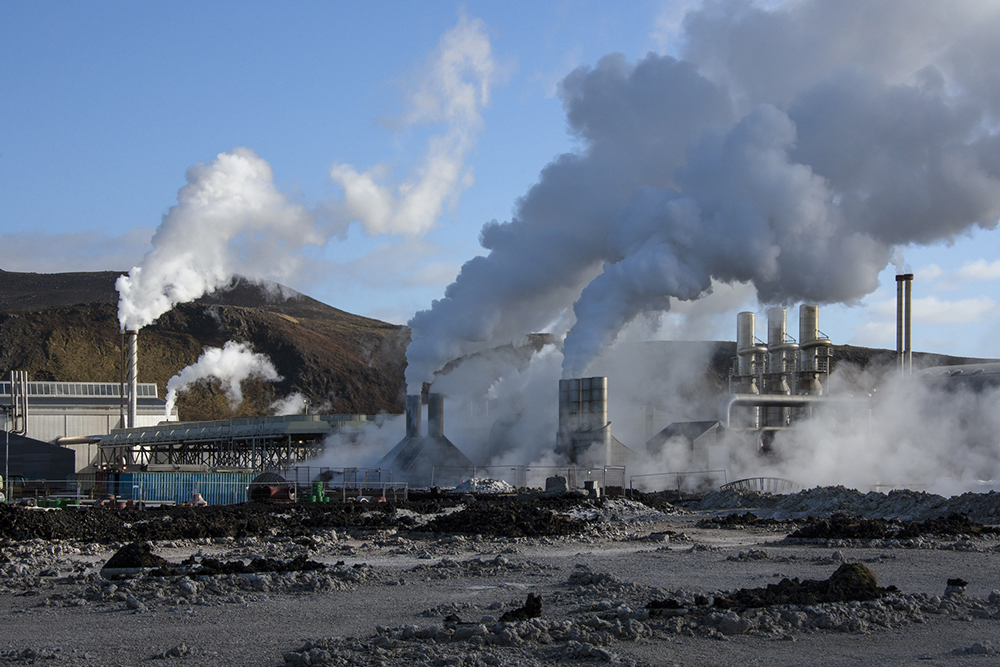
Unlike solar and wind power, geothermal generation is largely unaffected by weather or the day–night cycle. Its value as a domestic, low-carbon source of firm power capable of supplying the grid reliably increases as the share of renewables grows. Yet geothermal deployment in Japan has remained sluggish relative to the country’s widely recognized resource potential. Conventional geothermal projects exploit hydrothermal fluids and steam at depths of roughly 1–3 km and temperatures of about 200–300°C, but development is viable only where a heat source, sufficient fluid, and an effective caprock coincide. High-quality prospects are limited, and individual reservoirs are small compared with large thermal or nuclear generating assets. Even Japan’s largest projects are generally in the tens-of-megawatts range, leaving conventional geothermal with a structural weakness: it is dependable, but difficult to scale.
Supercritical geothermal resources could overturn that premise. They are thought to occur deeper beneath volcanic regions—typically at depths of 3–5 km and temperatures of 400–500°C. Above 374°C and 22.1 MPa, water loses the boundary between liquid and vapor and enters a supercritical state combining liquid-like density with high mobility. Actual subsurface fluids contain salts and gases, so their critical conditions do not match those of pure water; moreover, depressurization during ascent causes them to leave the supercritical state before reaching the surface. Even so, if fluids with exceptionally high temperature and enthalpy can be produced reliably, output per well could rise from several megawatts in conventional systems to tens of megawatts, enabling plants on the order of 100 MW. Japan’s Agency for Natural Resources and Energy likewise contrasts conventional developments of roughly 30 MW with a 100 MW-class development concept for supercritical geothermal systems. The ability to increase output with relatively few wells and a limited surface footprint is another major advantage.
Supercritical geothermal energy, however, is not simply a matter of drilling deeper to obtain hotter steam. Drilling simultaneously encounters extreme temperature and pressure, lost circulation, blowout hazards, and wellbore instability. Once production begins, wells and power-generation equipment must withstand highly acidic fluids, chlorides, hydrogen sulfide, silica, and other aggressive constituents. Thermal stress from high temperatures and fatigue caused by repeated cooling and reheating are unavoidable. The challenge extends beyond confirming that a resource exists: it requires whole-system engineering capable of transporting the fluid safely to the surface and delivering it to facilities designed to operate for decades. This article reviews Japan’s research and development history and the achievements of the Iceland Deep Drilling Project (IDDP), examines the principal bottlenecks in materials, wells, surface facilities, and turbines, and considers what Japan must achieve to move toward commercialization.
Contents
Why Supercritical Geothermal—and Why Now? Transforming Productivity per Well
The economics of conventional geothermal development depend heavily on drilling success rates and steam output per well. Because drilling costs rise steeply with depth, high temperature alone does not make a project viable. The central premise of supercritical geothermal development is to offset high drilling costs with exceptional well productivity by harnessing the enormous enthalpy of high-temperature, high-pressure fluids. Whereas conventional wells often produce about 2–7 MW, targets of 20–50 MW are frequently cited for superhot wells. If several supercritical wells can feed a single plant, a 100 MW-class facility—extraordinary by geothermal standards—comes into view. Recent simulations of promising areas in Japan have also identified development scenarios that could sustain 100 MW for 30 years under specified conditions.
Resource estimates nevertheless require caution. Even where high-temperature rock exists, power generation is impossible without sufficient permeability to sustain economic flow rates and a recharge mechanism that keeps fluids circulating. The supercritical zone is thought to lie near the transition from brittle fracturing to ductile deformation, where fracture formation and persistence may differ from those in shallower reservoirs. Fluid density, viscosity, and heat capacity change sharply near the critical point, so even small temperature and pressure differences can govern flow and phase separation. Resource assessment must therefore couple temperature distribution with rock mechanics, permeable structures, and fluid geochemistry.
Japan’s Research History: From Deep, High-Temperature Wells to “Supercritical Resources”
Japan’s research into supercritical geothermal energy did not begin overnight. Deep geothermal investigations in the 1980s and 1990s established the technical foundation. In the Sengan area, NEDO exploration well N61-SN-7D was drilled to approximately 3,000 m in fiscal 1988, and a flow test confirmed steam production equivalent to about 20 MW. During the subsequent Deep-Seated Geothermal Resources Survey of 1992–1995, well WD-1a in the Kakkonda area reached approximately 3,700 m and recorded an estimated bottomhole temperature of 500°C—among the highest ever measured in Japan. Although the well did not intersect a sufficiently developed fracture network, it provided landmark field evidence that heat on an entirely different scale exists beneath conventional reservoirs.
From the 2000s onward, Iceland’s IDDP demonstrated the practical feasibility of superhot wells, reinvigorating conceptual research in Japan. Following discussions under major research initiatives of the Japan Society for the Promotion of Science and the International Continental Scientific Drilling Program, work advanced through the “Tera-Watt Energy Development in Island-Arc Japan” exploratory research program in fiscal 2014–2015 and studies of innovative drilling and completion technologies for supercritical geothermal conditions in fiscal 2015–2017. Japan’s 2016 Energy and Environment Innovation Strategy identified supercritical geothermal power as a promising breakthrough technology and set out a roadmap toward deployment around 2050. In fiscal 2018–2020, NEDO systematized resource assessment, exploratory-well specifications, casing and cement technologies, and reservoir modeling. In fiscal 2021–2023, it refined surface surveys and conceptual models in areas including Hachimantai, Kakkonda, southern Yuzawa, and Kuju. Current priorities are the reassessment of multiple domestic prospects and the design of exploratory drilling programs.
What the IDDP Has Demonstrated: The Resource Has Been Reached, but Commercialization Still Lies Ahead
The IDDP is a long-term research and development program launched in 2000 by Icelandic power and geothermal companies together with the national energy authority. Its purpose is to drill 4–5 km-class wells into the roots of existing high-temperature geothermal systems and determine whether power generation and the recovery of valuable materials can be economically viable when superhot fluids at 400–600°C are produced. Importantly, the plan is not to deliver fluid that was supercritical underground directly to a turbine at supercritical pressure. At the surface, the fluid is handled as depressurized, high-temperature superheated steam; its phase state and chemical composition therefore change substantially across the reservoir, well, and surface facilities.
The first well, IDDP-1, targeted a depth of 4,000 m in the Krafla geothermal field in 2009 but unexpectedly encountered magma at about 2,100 m. Drilling stopped there, yet the well was cooled, completed, and flow-tested, confirming superheated steam at roughly 450°C and exceptionally high well output. Estimated generating capacity reached several tens of megawatts, drawing worldwide attention to the potential of superhot resources. At the same time, corrosion, the reliability of valves and wellhead equipment, and sustained operability remained unresolved; the result did not translate directly into commercial generation. IDDP-2 was created in 2016–2017 by deepening an existing well at Reykjanes. It reached 4,659 m, a bottomhole temperature of 427°C, and pressure of approximately 34 MPa, confirming both permeability and supercritical fluid derived from seawater. This was a landmark demonstration of supercritical conditions in an actual well, but long-term stable production and continuous generation through a commercial turbine have yet to be achieved.
The IDDP is now moving toward its third well, IDDP-3. Planned for Nesjavellir, the well will target a depth of 4–5 km and temperatures above 400°C, with drilling scheduled to begin in the fourth quarter of 2026. The project envisions a staged program extending beyond drilling to flow testing, validation of materials and wellhead equipment, and eventual connection to a power-generation system. Expected output is cited at 20–50 MW per well, but this remains a target to be validated rather than a demonstrated result. In short, the IDDP has shown that superhot resources can be reached, but it has not yet delivered a complete generating system combining long service life, high availability, and economic viability.
The Well as the Greatest Challenge: Containing Extreme Heat, Pressure, and Thermal Shock
The well performs the most demanding role in a supercritical geothermal system. During drilling, bit wear in hard, highly abrasive rock, thermal degradation of drilling fluids and additives, lost circulation, wellbore collapse, and blowout control all become simultaneous concerns. Many conventional organic additives and elastomers struggle to retain performance above roughly 200–250°C, while electronic components, batteries, seals, and communication systems in downhole tools also have temperature limits. Even when drilling proceeds under active cooling, temperatures rise rapidly if circulation stops. Equipment must therefore be designed not only for operating temperature but also for transient conditions, including shutdowns and restarts.
After completion, casing and cement determine well life. Carbon steel loses strength at high temperature, while thermal expansion during heating and contraction during cooling accumulate plastic strain. Preventing connection failures, buckling, and collapse requires a multi-string casing design that incorporates the full temperature history, together with reliable cement placement along the entire well. Conventional Portland-cement systems, however, may undergo structural changes in acidic, high-salinity environments above 300°C, losing permeability control and bond strength. Heat- and acid-resistant materials such as calcium aluminate cements are under development, but data demonstrating decades of durability at full well scale remain limited. The essential issue is not merely the strength of individual materials, but whether the steel–cement–rock interfaces can retain integrity under repeated thermal cycling.
Well-control equipment likewise requires greater design margins than in conventional operations. Blowout preventers, wellhead valves, packers, and liner hangers must withstand not only maximum operating pressure but also heat-induced loss of sealing performance and steep temperature differentials during rapid cooling. If instrumentation fails, pressure may have to be controlled without a clear picture of downhole conditions. A redundant architecture combining high-temperature fiber-optic monitoring, heat-resistant sensors, and surface-replaceable instrumentation is needed so that the failure of any single device cannot escalate directly into a serious incident. Drilling, completion, and flow testing must be managed not as separate operations, but as one continuous temperature-and-pressure history.
Managing Highly Acidic Fluids: Materials Selection Cannot Be Based on Temperature Alone
The corrosivity of supercritical geothermal fluids is governed not only by temperature and pressure, but also by chlorides, hydrogen sulfide, carbon dioxide, hydrogen chloride, dissolved metals, pH, and flow velocity. In vapor-dominated volcanic systems in particular, superheated steam may contain trace hydrogen chloride that forms an extremely acidic liquid when it condenses in the well or piping. Materials that remain relatively stable in the hottest zone may begin to corrode rapidly where depressurization and cooling produce condensate. Selecting an alloy rated for 500°C is therefore insufficient. A corrosion map must track phase and chemical changes from the bottomhole through the separator, piping, heat exchangers, and turbine.
Candidate materials include high-chromium steels, duplex stainless steels, nickel-based alloys, titanium alloys, and corrosion-resistant coatings. Yet extensive use of corrosion-resistant alloys along the full well length and throughout surface facilities would drive capital costs sharply higher. A practical solution is materials zoning: expensive alloys are deployed only in the most aggressive environments, with materials changing according to temperature and fluid chemistry. This must be combined with chemical neutralization, gas removal, control of condensation locations, flow-velocity management, and piping designed for cleaning. Online monitoring of corrosion products and deposits, linked to predictive maintenance forecasts of wall-thickness loss, is also indispensable.
Surface Facilities and Turbines: Converting High Enthalpy into Electricity
At the surface, the fluid must first be depressurized safely at the wellhead; sand, rock fragments, and corrosion products must then be removed, and steam, liquid, and non-condensable gases separated. High-enthalpy fluids promise high output, but high-velocity two-phase flow intensifies erosion–corrosion at pipe bends and valves. Scaling by silica, metal sulfides, and other species changes whenever pressure, temperature, or pH shifts. Separators, scrubbers, valves, instrumentation, and heat exchangers cannot merely be specified for “high-temperature service”; they must be designed for the actual fluid composition and operating transients. A short, successful flow test remains far removed from sustained operation as a power plant.
Nor can an existing geothermal steam turbine necessarily be connected without modification. Although high-temperature steam raises theoretical efficiency, depressurization, temperature conditioning, mixing, or staged expansion may be required to keep inlet temperature and pressure within the allowable limits of turbine materials and rotating components. Chlorides and particulates in the steam can cause pitting, stress-corrosion cracking, and liquid-droplet erosion of moving and stationary blades. Rotor and blade materials must combine high-temperature strength with corrosion resistance, and coatings, surface treatments, and replaceable wear components may be needed. Depending on fluid conditions, the generation system must compare flash configurations, direct use of superheated steam, and secondary-fluid cycles through heat exchangers to optimize net output, corrosion risk, maintainability, and cost.
The Path to Commercialization: From “We Drilled It” to “It Runs for 30 Years”
The technical challenges of supercritical geothermal development emerge as an interconnected chain rather than isolated components. Reducing well diameter lowers drilling cost but increases pressure losses during production. Cooling the well protects equipment yet imposes severe thermal shock on casing and cement. More corrosion-resistant alloy extends service life but raises investment per well. Chemical neutralization may suppress corrosion while creating new problems in scale formation and effluent treatment. Demonstration projects should therefore be judged not by peak temperature or instantaneous flow rate, but by shared metrics including net generation, continuous operating time, corrosion rate, maintenance intervals, well decline, and plant capacity factor.
The next stage of research and development is integrated testing in which fluid from an exploratory well is brought to the surface and full-scale materials and equipment are exposed continuously. High-temperature, high-pressure autoclave testing is essential, but real fluids combine pressure fluctuations, flow velocity, solid particles, and phase changes. Laboratory corrosion resistance does not translate directly into service life in an actual well. A realistic route to commercializing a resource with substantial uncertainty is to integrate pre-drilling geological and geophysical surveys, temperature, pressure, and lost-circulation data collected during drilling, and fluid-chemistry and corrosion data from production into a single digital model, then use that model to update the design and maintenance plan.
Outlook for Japan: Can Its Industrial Base Be Transformed into an Integrated System?
Japan has accumulated many of the component technologies required for supercritical geothermal development. Domestic companies and research institutions possess strengths in highly corrosion-resistant tubing, specialty alloys, cement, wellhead equipment, steam turbines, power-plant engineering, geophysical exploration, and downhole monitoring. Data from the deep, high-temperature wells at Kakkonda and decades of volcanic and geothermal research are equally valuable. Yet even outstanding components will not produce a commercial system if resource assessment, well design, fluid treatment, generation equipment, maintenance, and community engagement are optimized separately. Japan’s decisive challenge is whether it can bring materials manufacturers, drilling contractors, heavy-electrical equipment suppliers, research institutions, and power producers together from the outset and design an exploratory well not merely as a resource-confirmation well, but as a demonstration platform for validating the entire power-generation system.
Commercialization will require public funding to share the risks of the first several wells—risks that are difficult for the private sector to bear alone—together with a staged, stage-gate approach. Establishing go/no-go criteria for subsurface temperature, permeability, fluid chemistry, corrosion testing, and sustained flow would avoid committing the entire investment at once. Potential impacts on hot-spring resources, blowout safety, induced seismicity, and disaster planning in volcanic regions will demand monitoring and disclosure even more transparent than for conventional geothermal projects. Targeting deeper resources does not automatically reduce social constraints. On the contrary, because the technology involves substantial uncertainty, the speed of development will depend on mechanisms for sharing data with local communities.
If supercritical geothermal energy becomes a reality, geothermal power in Japan could shift from a resource developed by locating one high-quality natural reservoir at a time to one that uses engineering to control vast quantities of deep heat and scale deployment to the 100 MW class. Its value, however, does not arise from high temperature alone. It emerges only when high-temperature, high-pressure, highly acidic fluids can be produced safely and power can be generated over the long term while corrosion and thermal fatigue are controlled. The IDDP has demonstrated both the promise that superhot resources can be reached and the reality that the hardest problems begin after reaching them. Japan’s next barrier is to drill an exploratory well that confirms the resource and validates materials, the well, surface facilities, and the turbine as an integrated system. If that single well succeeds, it could fundamentally redefine the scale of geothermal power generation.
References and Sources
1. Agency for Natural Resources and Energy (2025), “Development of Supercritical Geothermal Power-Generation Technology,” Renewable Energy Division, April 2025.
2. New Energy and Industrial Technology Development Organization (NEDO) (2021), “Research and Development of Supercritical Geothermal Power-Generation Technology,” Project Overview (Project Code P18008).
3. NEDO Research Evaluation Committee (2022), “Post-Project Evaluation Report: Research and Development of Supercritical Geothermal Power-Generation Technology,” January 2022.
4. Asanuma, H. et al. (2024), “R&D for Expanded Deployment of Geothermal Power / Technology Development for Supercritical Geothermal Resources / Resource Assessment in the Kakkonda Area,” Materials from the FY2023 NEDO Results Reporting Session.
5. Iceland Deep Drilling Project (IDDP), “About Us,” project overview, results from IDDP-1 and IDDP-2, and the IDDP-3 plan (accessed October 2026).
6. Friðleifsson, G. Ó. et al. (2017), “The Iceland Deep Drilling Project 4.5 km deep well, IDDP-2, in the seawater-recharged Reykjanes geothermal field in SW Iceland has successfully reached its supercritical target,” Scientific Drilling, Vol. 23, pp. 1–12. DOI: 10.5194/sd-23-1-2017.
7. Friðleifsson, G. Ó. et al. (2021), “The IDDP Success Story—Highlights,” Proceedings of the World Geothermal Congress 2020+1.
8. Thorbjornsson, I. O. et al. (2020), “Materials investigation of the high temperature IDDP-1 wellhead,” Geothermics, Vol. 87, 101866.
9. Yanagisawa, N., Masuda, Y., and Asanuma, H. (2021), “Survey of the Casing Material Corrosion Problem for Supercritical Geothermal Development,” Proceedings of the World Geothermal Congress 2020+1.
10. Karlsdottir, S. N. et al. (2023), “Material Challenges for Deep Superhot Geothermal Wells,” Geothermal Rising Conference Transactions.
11. Heřmanská, M., Kleine, B. I., and Stefánsson, A. (2019), “Supercritical Fluid Geochemistry in Geothermal Systems,” Geofluids, Vol. 2019, Article ID 6023534. DOI: 10.1155/2019/6023534.

Free Membership Registration
What You Can Do After Registering
All articles are available to read free of charge. Free membership registration is required to download reports.
- You can download all reports that we make available free of charge in the future.
- You can opt in to receive our newsletter (the launch date and frequency will be determined at a later date).

This is a Japanese-English bilingual media outlet specializing in geothermal energy, operated by GeoVanguard Energy Inc. Information from Japan tends to stay within Japanese, while overseas information does not reach Japan. Our purpose is to bridge that gap.