Next-Generation Technologies
Beyond Dependence on Natural Hydrothermal Resources:Advances in EGS Technology and the Conditions for Deployment in Japan and Asia
SHARE


—Technology Transfer from the Shale Industry, Induced Seismicity Risk Management, and Deployment Challenges in Tectonically Active Regions—
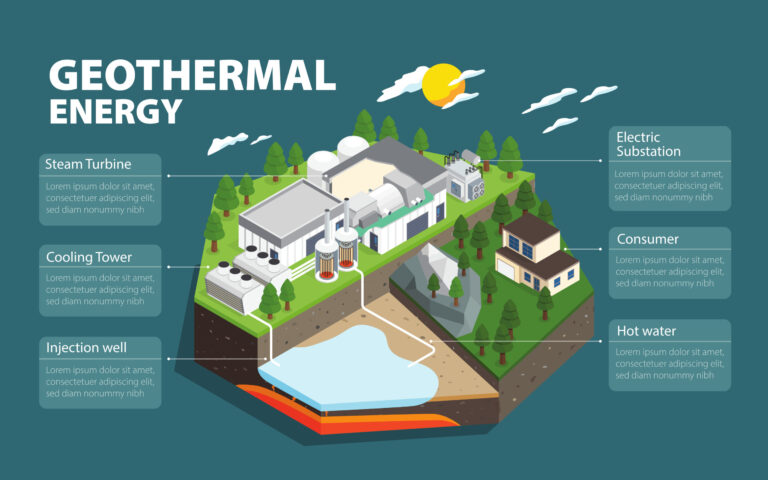
Geothermal power occupies a distinctive place among renewable energy sources as a low-carbon resource whose output is largely unaffected by weather or time of day. Conventional geothermal development, however, requires three subsurface elements: sufficient heat, a fluid capable of transporting that heat to the surface, and caprock that confines hot water or steam within the reservoir. Locations where all three coexist at economically developable depths and scales are limited, and uncertainty in resource exploration, exploration-well and drilling risks, and siting constraints have inhibited wider deployment.
Enhanced Geothermal Systems (EGS) offer one way to overcome these resource constraints through engineering. Rather than relying on favorable natural conditions, EGS combines drilling, well completion, the creation and enhancement of subsurface flow paths, downhole monitoring, and circulation control to establish and manage pathways through which a working fluid extracts heat from the subsurface. Advances in horizontal drilling, multistage hydraulic stimulation, fiber-optic sensing, and data analytics developed by the shale industry are accelerating the commercialization of EGS. Nevertheless, EGS—which recovers heat over long periods by circulating fluid—differs from shale development, which produces hydrocarbons in a single direction, and therefore imposes different requirements for well life, high-temperature performance, reservoir management, and safety.
The central commercialization question has shifted from whether drilling is technically possible to whether projects can operate safely and reliably over the long term at predictable cost. Key challenges include reducing uncertainty in subsurface structures, monitoring and managing induced seismicity risk, coexisting with hot-spring resources and local communities, and allocating early-stage drilling risk. EGS is not a technology that can be delivered through subsurface engineering alone; it also requires business-development capabilities that integrate permitting, financing, contracting with electricity offtakers, and community engagement. This article outlines the technology’s basic architecture and the transfer of capabilities from the shale industry, examines leading U.S. projects, and considers the conditions required for deployment in Japan and Asia.
Contents
What Is EGS? Engineering around the Limitations of Natural Geothermal Conditions
EGS is a geothermal development approach applied to formations that contain promising heat resources but lack the permeability or fluid supply required for commercial heat extraction. It uses well drilling to create or improve subsurface flow paths. Targets are not limited to high-temperature crystalline basement rock; depending on geology and development design, they may include a variety of low-permeability formations.
Fluid is injected from the surface through an injection well into the deep subsurface, increasing permeability by shearing and opening existing fractures or creating new tensile fractures. This treatment, known as hydraulic fracturing, creates and extends flow paths through which a working fluid is circulated. The hot fluid recovered from the production well is used in a steam-turbine or binary-cycle power plant, depending on its temperature and pressure. EGS augments conventional development—which searches for naturally occurring hydrothermal reservoirs—with an engineering approach to designing and managing subsurface flow paths.
Adapting Shale-Revolution Technologies for Geothermal Development
Progress in EGS has benefited significantly from the adaptation of oil and gas drilling technologies commercialized in North American shale development. Yet the two applications differ in target rock, fluid behavior, and operating period, requiring their physical mechanisms and performance specifications to be evaluated separately.
Three Enabling Technologies That Can Be Transferred
Directional and Horizontal Drilling: Well-path control technology used to drill a vertical section several thousand meters deep and then construct a horizontal section extending 1,000–2,000 meters or more along the target formation.
Multistage Hydraulic Stimulation: A technique that divides a long horizontal well section into multiple stages and sequentially injects high-pressure fluid into each interval to create and extend multiple subsurface flow paths.
Fiber-Optic Monitoring: Fiber-optic cables installed in a well continuously capture vibration responses and temperature profiles inside and around the well through distributed acoustic sensing (DAS) and distributed temperature sensing (DTS). The data are used to interpret fluid behavior and microseismic activity, although measurement accuracy and spatial resolution depend on installation conditions and analytical methods.
Geothermal-Specific Barriers: High Temperatures, Hard Rock, and Long-Term Circulation
The Challenge of Hard-Rock Drilling: Whereas shale development primarily targets sedimentary rock, many EGS projects encounter high-strength, highly abrasive crystalline or basement rock. Depending on lithology, temperature, and stress conditions, bit wear and thermal loads on drilling equipment can increase, making sustained rates of penetration and lower well costs major technical priorities.
High-Temperature Downhole Equipment: At temperatures above 200°C, conventional oil-and-gas logging tools and sensors begin to reach their operating limits. High-temperature durability and measurement reliability must therefore be ensured across the entire tool system, including electronics, seals, batteries, and communications components.
Fluid Dynamics of Long-Term Circulation: Shale development focuses largely on managing production decline; EGS, by contrast, must control flow rate, pressure, and heat-recovery performance over extended periods. Reservoir management must sustain thermal output while preventing cold injected fluid from reaching the production well before it is adequately heated because of preferential flow, and while limiting water losses, scaling, and corrosion. This distinction is also reflected in project-evaluation metrics. Faster drilling alone does not guarantee a lower levelized cost of electricity: hydraulic connectivity between injection and production wells, working-fluid losses, heat-exchange area, temperature-decline rates, and workover frequency must all be assessed. Even where initial testing achieves high flow rates, localized subsurface flow paths can degrade heat-recovery performance. Conversely, excessive flow-path growth may transmit pressure to unidentified faults or increase circulation losses. EGS competitiveness therefore depends not on drilling technology alone, but on integrated reservoir-management capabilities that optimize operating conditions through subsurface monitoring and iterative model updates.
Managing Induced Seismicity: Mechanisms and Limits
For the deployment of EGS, induced seismicity is a central issue affecting both safety and public acceptance.
Subsurface rock is subject to crustal stress, and fault stability is governed by the relationship among shear stress, frictional strength, and pore pressure. When fluid injection raises pore pressure along a fault plane, effective normal stress declines. Once shear stress exceeds frictional resistance, an existing fault slips—the fundamental mechanism of induced seismicity.
In a prominent example, an induced earthquake of up to ML 3.4—local magnitude, a scale based on the maximum amplitude of observed seismic waves—occurred in Basel, Switzerland, in 2006. Following a post-shut-in risk assessment, the project was terminated. In Pohang, South Korea, a Mw 5.4 earthquake occurred near an EGS site in 2017. Research and government investigations concluded that fluid injection had activated a critically stressed fault. The Pohang earthquake caused numerous injuries and extensive property damage, and the project was discontinued. Moment magnitude (Mw) is based on seismic moment and represents the physical scale of fault rupture.
Contemporary EGS projects emphasize induced seismicity risk management that combines pre-development characterization of faults and stress fields, microseismic monitoring, control of injection volume, pressure, and flow rate, and staged depressurization and shut-in criteria. A traffic-light system is an operating framework under which injection conditions are modified, injection is halted, or pressure is reduced when observed earthquake magnitudes, ground motion, or other indicators approach predefined thresholds. Seismic activity may nevertheless continue after shut-in, and real-time monitoring alone cannot eliminate risk.
The purpose of risk management is not to reduce the probability of seismicity to zero, but to define acceptable risk levels and operational decision criteria in advance. Baseline monitoring establishes the level of natural seismicity, while fault models and stress assessments are prepared before stimulation. During stimulation, monitoring integrates earthquake magnitudes, changes in hypocenter distribution, ground motion, injection volume, and wellhead pressure; after shut-in, it continues to track pressure diffusion and delayed seismicity. Sharing these procedures and decision criteria among regulators, operators, and local communities is essential to reconcile technical safety with public trust.
Geology Cannot Be Transplanted: Differences between the United States and Asia
The success of EGS is determined by more than the regional crustal stress regime. Temperature distribution, lithology, existing faults, natural fractures, permeability architecture, groundwater systems, and proximity to population centers and critical infrastructure combine to create site-specific development conditions. Drilling and stimulation technologies developed in the United States provide a valuable starting point, but their design parameters and operating standards cannot simply be transferred unchanged to different geological settings.
Induced seismicity risk in EGS varies not only with the regional stress field but also with the location, size, and orientation of existing faults; the stresses acting on them; subsurface permeability; distance from the injection point; injection volume and pressure; and vulnerability at the surface. Although many sites in the western United States lie in extensional regimes, this alone does not mean that fracture growth can be readily controlled or that seismic events will remain small. Development decisions must therefore be grounded in site-specific three-dimensional geological models and seismic hazard and risk assessments rather than broad regional classifications.
Across the Pacific Rim—including Japan, the Philippines, and Indonesia—complex stress regimes and active fault systems have developed in association with plate subduction. Stress conditions vary by location and depth, however, and compressional, strike-slip, and locally extensional regimes may coexist. Each site therefore requires an assessment of whether pressure changes could reach faults already near critical stress. In Japan, proximity to hot-spring areas and communities, the potential for hydraulic connectivity, and impacts on local economies also shape public acceptance. It is therefore important to investigate and communicate seismic risk separately from potential impacts on hot-spring resources.
Fervo Energy at the Forefront of Commercialization: From Demonstration to Large-Scale Deployment
One company leading the drive toward commercialization is Houston-based Fervo Energy.
At its commercial pilot, Project Red in Nevada, Fervo drilled wells to approximately 2,400 meters and constructed horizontal sections of roughly 1,000 meters, demonstrating hydraulic connectivity between injection and production wells through multistage hydraulic stimulation. A 30-day test conducted in 2023 recorded a temperature of approximately 191°C and a flow rate of 63 liters per second, corresponding to a maximum gross generating capacity of 3.5 MW assuming a supercritical ORC. The project entered commercial operation in October that year and now supplies round-the-clock carbon-free electricity to the Nevada grid serving Google’s operations.
Fervo has substantially improved hard-rock drilling efficiency through PDC bits, drilling control, well design, and iterative learning. However, claims that horizontal drilling time was reduced from several months to roughly 20 days—a reduction of more than 70%—are difficult to evaluate for reproducibility unless the comparison wells and scope of work are clearly defined. Cape Station in Utah was initially announced as a 400 MW project and was subsequently expanded to 500 MW. In September 2026, the first GeoBlock entered commercial operation and achieved net output of 33 MW. Development is now proceeding on an initial phase of approximately 100 MW and a second, additional 400 MW phase targeted for 2028.
The significance of this case lies in its demonstration that geothermal development may evolve from highly site-specific subsurface-resource projects into a repeatable drilling and construction process. The ability to develop a sequence of wells within the same area enables operators to accumulate learning from geological data, drilling parameters, procurement, and construction practices, thereby reducing the costs and schedules of subsequent wells. Results from an initial site, however, are not necessarily reproducible elsewhere. Future evaluation must examine operating records for long-term thermal output, restimulation requirements, capacity factors, and maintenance costs to assess economics at the power-plant level.
Three Design Requirements for Viable Deployment in Japan and Asia
It would be inappropriate simply to transplant the large-scale, horizontal-well EGS model advancing in the United States into Japan or elsewhere in Asia. Stimulation methods, well layouts, monitoring systems, and project scale must be redesigned site by site to reflect complex fault systems, diverse volcanic and nonvolcanic settings, proximity to hot-spring resources, dense land use, permitting requirements, and community-consensus processes. The central implementation question is not which technology is inherently superior, but whether a portfolio can be selected that fits both geological and social conditions.
Phased, Adaptive Creation and Enhancement of Subsurface Flow Paths: Stimulation parameters should be updated in response to observed seismic and hydraulic behavior using staged changes in flow and pressure and, where appropriate, cyclic injection. Simply reducing injection pressure does not guarantee lower risk; operating criteria must also account for distance to faults, cumulative injected volume, pressure propagation, and post-shut-in seismicity.
Selecting Between EGS and Closed-Loop Systems: Closed-loop systems circulate a working fluid through a sealed wellbore circuit and, in principle, do not require production of formation fluids or hydraulic stimulation of the reservoir. They may therefore reduce induced seismicity risk and hydraulic interference with hot-spring zones relative to conventional EGS. At the same time, they introduce a different set of technical and economic challenges, including the cost of drilling extensive wellbores, output constrained by conductive heat transfer, and long-term well integrity.
Evaluate Hydraulic Connectivity, Not Depth Alone: Targeting deep basement rock away from areas directly beneath hot-spring zones may expand the range of developable locations. Yet even below 3,000 meters, faults and fractures may provide hydraulic connections to shallower hydrothermal systems. Depth should not be treated as a proxy for safety; potential impacts on hot-spring resources must instead be evaluated using tracer tests, groundwater geochemistry, pressure responses, and three-dimensional geological models.
A staged investment process that accumulates observational data from small-scale demonstrations is effective in meeting these requirements. Clear stage-gate criteria should be established for exploration, test wells, circulation testing, and power-generation demonstrations, with findings from seismic-response and hot-spring monitoring incorporated into each subsequent phase. Giving local stakeholders access to project data can support sustained dialogue that does not rely solely on public briefings. Technical demonstration and social deployment should be developed together within a single project design rather than treated as separate workstreams.
Turning Japan’s Industrial Base into a Next-Generation Geothermal Business Capability
In light of EGS advances in the United States, Japan needs a strategy that does more than import overseas technologies: it must connect the technological foundations of domestic companies with the country’s distinctive development conditions.
From Equipment Supply to Integrated Solutions
Japanese companies have an established international track record in supplying corrosion- and heat-resistant oil-country tubular goods and geothermal power-generation equipment. Estimates suggesting that Japanese manufacturers account for roughly 70% of the global market for geothermal steam turbines have often been cited, but the proportion varies depending on the aggregation period, capacity basis, and whether flash and binary systems are included. The next industrial opportunity will depend on whether Japan can combine its materials and equipment technologies with U.S. strengths in drilling, reservoir design, and data analytics and deliver them as an integrated development system.
Combining Offtakers with Public Support
For next-generation geothermal projects with substantial early-stage development risk, financing structures that combine grants, government-backed risk capital, long-term PPAs, capacity value, and environmental attributes will be critical. Data centers and manufacturers pursuing hourly carbon-free energy procurement could become particularly important offtakers. Corporate PPAs alone, however, cannot readily absorb subsurface-resource risk; public support and private-sector offtake must therefore be designed as complementary instruments.
Integrating Dispersed Expertise
Commercializing next-generation geothermal energy requires cross-disciplinary expertise in subsurface engineering, regulation, finance, and community engagement. Project success will depend not merely on supplying individual technologies or services, but on establishing business entities capable of integrating and managing the full project lifecycle—from site selection, risk assessment, permitting, financing, and economic analysis through construction and operations.
EGS could expand the geography in which subsurface heat can be utilized, but significant challenges remain, including technology maturity, drilling cost, long-term circulation performance, induced seismicity, permitting, and community consensus. Deployment in Japan will require more than importing overseas technologies; it will demand demonstrations and risk assessments tailored to local geology, stress regimes, hot-spring resources, and land-use conditions. Whether Japanese companies—with their strengths in drilling, heat-resistant materials, power-generation equipment, and subsurface monitoring—can integrate capabilities from site selection through project structuring will determine the prospects for industrializing next-generation geothermal energy.
References
- U.S. Department of Energy, “Enhanced Geothermal Systems,” Geothermal Technologies Office, 2026.
- Majer, E. L., Nelson, J., Robertson-Tait, A., Savy, J., and Wong, I., “Protocol for Addressing Induced Seismicity Associated with Enhanced Geothermal Systems,” U.S. Department of Energy, DOE/EE-0662, 2012.
- Ripperger, J., Kästli, P., Fäh, D., and Giardini, D., “Ground Motion and Macroseismic Intensities of a Seismic Event Related to Geothermal Reservoir Stimulation below the City of Basel—Observations and Modelling,” Geophysical Journal International, Vol. 179, No. 3, pp. 1757–1771, 2009.
- Kim, K.-H., Ree, J.-H., Kim, Y., Kim, S., Kang, S. Y., and Seo, W., “Assessing Whether the 2017 Mw 5.4 Pohang Earthquake in South Korea Was an Induced Event,” Science, Vol. 360, No. 6392, pp. 1007–1009, 2018.
- Korean Government Commission on Relations between the 2017 Pohang Earthquake and EGS Project, “Summary Report of the Korean Government Commission on Relations between the 2017 Pohang Earthquake and EGS Project,” Geological Society of Korea, 2019.
- Fervo Energy, “Fervo Energy Announces Technology Breakthrough in Next-Generation Geothermal,” July 18, 2023.
- U.S. Department of Energy, “Enhanced Geothermal Systems (EGS) Pilot Demonstrations,” Geothermal Technologies Office, 2024.
- Fervo Energy, “Fervo Energy Declares Commercial Operation at Cape Station Ahead of Schedule, Leading the Race for Next-Generation Geothermal Energy,” October 1, 2026.


Free Membership Registration
What You Can Do After Registering
All articles are available to read free of charge. Free membership registration is required to download reports.
- You can download all reports that we make available free of charge in the future.
- You can opt in to receive our newsletter (the launch date and frequency will be determined at a later date).

This is a Japanese-English bilingual media outlet specializing in geothermal energy, operated by GeoVanguard Energy Inc. Information from Japan tends to stay within Japanese, while overseas information does not reach Japan. Our purpose is to bridge that gap.