Policy and Regulation
Japan’s Sleeping Geothermal Giant: Breaking Through Regulatory, Community and Technology Barriers to Build a Decarbonized Baseload Resource
SHARE


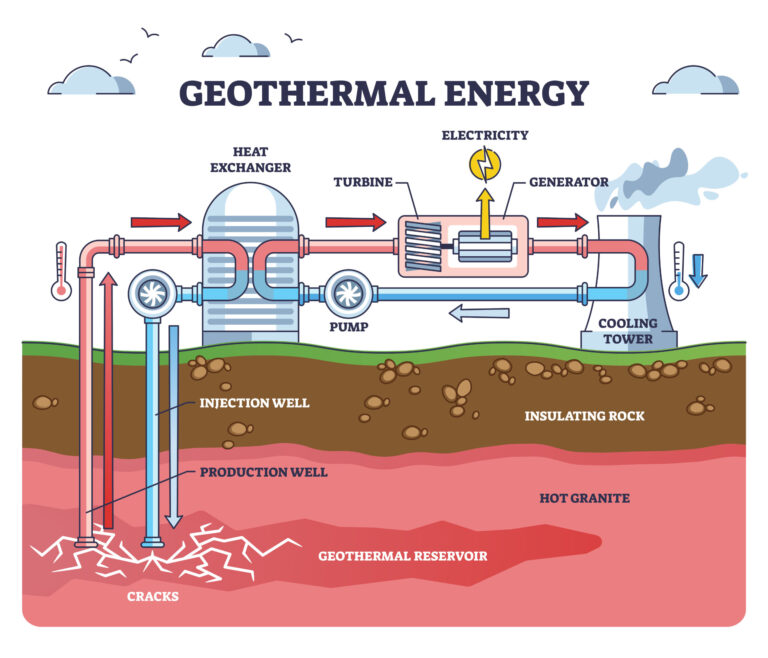
Japan’s geothermal sector is not stalled for lack of heat beneath the ground or drilling expertise. Its most difficult obstacle is the one that never appears in a project finance model: human relationships. Ryokan operators, hot-spring owners, neighborhood associations, forestry cooperatives, land improvement districts, landowners, municipal governments and tourism bodies are bound together by local histories and power dynamics that titles alone cannot explain. Who was consulted first? Who was left out of a meeting? Were earlier promises honored? Such details can determine the fate of a project before any decision is made on an investment worth tens of billions of yen. Even overseas companies with superior drilling technology and capital cannot build this relational capital overnight. What they need is not simply an alliance with a Japanese company, but collaboration with a local partner that understands community memory, listens to opposition and remains at the table when discussions become difficult. Corporate size is no guarantee of trust. This article examines why a country with an estimated 23.47 GW of geothermal resource potential has installed only about 0.6 GW—and why the answer lies not only in regulation and technology, but also in relationships between people.
Contents
A New Era of Electricity Demand: Revaluing Geothermal as Firm Power
Japan’s Seventh Strategic Energy Plan, approved by the Cabinet in February 2025, envisages renewables supplying roughly 40–50% of electricity generation in fiscal 2040, with geothermal contributing around 1–2%. The government explicitly classifies geothermal as a stable baseload resource. Yet geothermal alone will not solve the power-supply challenge. Solar faces concerns over landscape impacts and dependence on Chinese supply chains; offshore wind is contending with sharply higher construction costs; nuclear power remains constrained by safety reviews and local consent; and batteries carry high costs for long-duration and seasonal balancing. Geothermal is therefore not a single substitute for all other technologies. Its strategic value lies in strengthening the generation portfolio as a low-carbon, firm resource that complements variable renewables.
In offshore wind, a Mitsubishi Corporation-led consortium withdrew in August 2025 from three Round 1 areas off Akita and Chiba. The projects had been awarded at bid prices of ¥11.99–16.49/kWh, but a government review found that inflation, yen depreciation, higher interest rates and supply-chain constraints had pushed construction costs to more than twice the level assumed at the time of bidding. This did not demonstrate an inherent limit of offshore wind; it exposed a weakness in auction and revenue designs that could not adequately absorb price movements over a long development cycle. Geothermal faces the same institutional question: unless policy determines who will bear the risks of development timelines stretching beyond a decade, resource potential will never translate into installed capacity.
Half a Century of Development: Why Capacity Remains at 0.6 GW
Japan’s first commercial geothermal plant, Matsukawa in Iwate Prefecture, began operating in 1966. Supported by initiatives such as the post-oil-shock Sunshine Project, large flash-steam developments followed in Tohoku, Hokkaido and Kyushu. From the late 1990s, however, new utility-scale projects entered a prolonged lull. The feed-in tariff introduced in 2012 stimulated activity, particularly in small binary plants, while the 46 MW Wasabizawa plant entered service in 2019 and the 14.9 MW Appi plant in 2024. Even so, these additions have not materially lifted national capacity.
The Seventh Strategic Energy Plan targets a geothermal share of around 1–2% in fiscal 2040. That would be a major increase from roughly 0.3% today, but translating the target mechanically into 1.5–3 GW would be misleading because the required capacity depends on future electricity demand and plant capacity factors. Government and industry estimates generally indicate that roughly 2–4 GW may be needed. Whatever the precise figure, the gap from today’s 0.6 GW is substantial. Recognizing geothermal’s long lead times, the government has also begun tracking not only commissioned capacity but “geothermal resource capacity” confirmed through drilling as a policy indicator.
The Regulatory Barrier: Development Delayed by Overlapping Procedures
Hot Spring Act: A National Framework, Uneven Local Practice
Exploration and production wells for geothermal projects require drilling permission from the prefectural governor under the Hot Spring Act. In practice, regions differ in the frequency of hot-spring committee meetings, required setbacks from existing sources, landowner consents and supporting documentation. Government material reviewed for this article notes that where committees meet only twice a year, missing a review window can delay a project by roughly 12 months once snowfall and rig availability are taken into account. The central problem is less the statute itself than the mismatch between municipality-specific rules and review practices and the sequential drilling program needed to develop multiple wells.
Natural Parks Act: Reconciling Conservation with 80% of the Resource Base
About 80% of Japan’s geothermal resources are believed to lie within national or quasi-national parks. The Ministry of the Environment has gradually revised its operating rules, opening more scope for exploration and development in “best-practice” projects that protect landscapes and ecosystems. Project formation nevertheless remains difficult because protected-area classifications intersect with procedures for national forests, protection forests, roads, well pads and steam pipelines. Directional drilling can reduce the surface footprint, but longer well paths increase cost and drilling risk. The policy choice is not simply deregulation versus protection; Japan needs a more granular review process that distinguishes subsurface development from surface disturbance.
Environmental Impact Assessment: Faster Reviews, Persistent Schedule Risk
Under the Environmental Impact Assessment Act, geothermal plants of 10 MW or more are Class I projects; plants from 7.5 MW to below 10 MW are Class II projects and are screened individually. The statutory sequence—primary environmental consideration, scoping, field surveys, draft environmental impact statement and final statement—has traditionally taken about three to four years. Measures such as front-loading surveys now aim to shorten the process to roughly two years. Even so, geothermal projects commonly require more than a decade from concept to commissioning once resource assessment, community engagement, permitting and construction are combined. When interest rates and drilling costs are rising, time itself erodes project economics.
The Community-Consent Barrier: Geothermal’s Decisive Challenge Is Above Ground
A geothermal project may have promising survey results, meet environmental standards and secure agreements with landowners, yet still fail to advance if the wider community—including stakeholders beyond the immediate site—does not accept it. Legal permission and social license are not the same. Nor are the formal consenting parties necessarily the people who carry influence locally. A hot-spring association chair may support a project while individual source owners remain uneasy. A mayor may champion development, yet a key figure in a village may refuse even to begin discussions because “the order of consultation was wrong.” In practice, the informal map of longstanding ties, earlier conflicts, family relationships, personal compatibility and roles in local events can matter more than the organizational chart showing who signs the contracts.
A hot spring is more than a volume of heated water. It underpins ryokan revenue, employment, visitor circulation, regional branding, public baths, festivals and the culture of therapeutic bathing. Even a slight change in flow or temperature raises a practical question: who will take responsibility after the developer has left? Because subsurface behavior is inherently uncertain, assurances that an impact is “scientifically unlikely” do not by themselves create confidence. Communities are not asking only about probability. They want to know who will remain on site, who will order a shutdown, who will compensate losses and who will oversee recovery for years if the worst occurs. They also judge whether the individual in charge is willing and able to carry that responsibility. Developers must therefore resist abstract theorizing, build personal trust with local opinion leaders and earn the judgment that “this is someone we can rely on.”
Design Who Speaks—and in What Order—Before Designing the Message
External developers often prioritize efficiency: brief the municipality and major organizations simultaneously, circulate public materials and answer questions with technical evidence. Locally, however, what happens before that stage can be decisive. Was the person who should have been approached first bypassed? Was a likely opponent excluded? Did residents learn of the briefing from a newspaper report? Small procedural mistakes can foster suspicion that the outcome was predetermined or that decisions were made behind closed doors. Once that suspicion takes hold, even the most rigorous data may be read not as evidence, but as a tool for the developer to justify itself.
Early in development, repeated small-group conversations that surface concerns are often more effective than a large public meeting. The first agenda should not be plant capacity or power-sales revenue. Developers should begin by asking what the community wants to protect, how earlier developments caused harm, and how residents view depopulation and the shortage of successors for local businesses. A critical test is whether the project team gives the community more time to tell its history than it takes to present its proposal.
Transfer Trust from the Individual Representative to the Organization
Geothermal development lasts more than a decade, while corporate representatives may rotate every few years and expatriate staff even more frequently. From the community’s perspective, the person they have finally learned to speak candidly with suddenly disappears; each time a successor says, “I will review the history,” the relationship resets. Conversations never captured in minutes, assurances exchanged at funerals, weddings or community events, and unspoken courtesies rarely survive a conventional handover file.
Successful developers treat community-relations leads not as public-relations staff but as core decision-makers. They give site leaders meaningful budget authority and direct access to technical, legal and executive teams. When personnel change, successors work alongside incumbents for several months, while commitments and unresolved issues are preserved as institutional knowledge in a form that can be shared.
To deliver projects over the long term—and reproduce successful development across multiple regions—companies must move beyond personality-dependent engagement and trust based on individual goodwill. Community-consent practices need to become a repeatable system backed by organizational accountability for fulfilling commitments.
Build Dissent into Decision-Making Rather Than Waiting for Unanimity
Consensus-building is not a sales exercise aimed at increasing the number of supporters. Opponents can expose issues a developer has missed, including water use, noise, traffic, landscape impacts and risks to a tourism brand. If opposition is dismissed as a lack of understanding that can be overcome through further explanation, the community may fracture. Long-term legitimacy is more likely to grow when skeptical hot-spring operators and residents sit on monitoring committees and help select survey locations, evaluation metrics, independent experts and shutdown thresholds.
Instead of asking at the outset whether a community supports development, the parties should jointly define the conditions for moving from one stage to the next: desktop review, surface survey, geophysical exploration, slim-hole or exploratory drilling, flow testing and commercial development. They should agree in advance whether readings outside specified thresholds will trigger a pause, further investigation or withdrawal. Explicit exit criteria are not a sign of weakness. Demonstrating that a community retains the power to say no is what begins to reduce the asymmetry in the dialogue.
Design Community Benefits Around a Shared Future, Not Compensation
Returning a share of electricity revenue to the locality can lock the relationship into one between a party paying for inconvenience and a party receiving compensation. Communities do not necessarily want uniform cash payments. Priorities vary: replacing aging hot-water distribution pipes, sustaining public baths, supporting succession at ryokan businesses, improving snow clearance and transport, strengthening schools and clinics, or using heat in agriculture and forestry. Benefits should not be selected from a menu prepared by an outside developer. They should be designed backward from the life the community wants to sustain 10 or 20 years from now.
Working with Overseas Companies: Japan Needs Co-Owners, Not Translators
International geothermal companies bring experience that remains limited in Japan, including horizontal drilling, productivity enhancement, closed-loop systems and digital reservoir analysis. Technology alone, however, does not create a viable project. The larger gap is often between the pace of corporate decision-making and the time required to build local trust. Overseas headquarters must give investment committees clear deadlines, budgets, probabilities of success and exit conditions. Early conversations with communities demand the opposite discipline: avoiding premature conclusions and investing years in relationships even before commercial viability is established. The Japanese partner must bridge these two clocks.
A Blue-Chip Name Alone Does Not Earn Local Trust
It is too simplistic to assume that an overseas developer can secure acceptance merely by partnering with a major Japanese utility, trading house or construction company. Large corporations offer capital, creditworthiness, legal capability, EPC expertise and routes to market. They may also provoke resistance if head-office priorities override local realities. Frequent personnel rotations interrupt relationships; lengthy internal approvals slow decisions; standardized compliance rules leave little room for local nuance; and headquarters may hesitate to own small, community-specific commitments. If a company has clashed with the area over an earlier project, brand recognition can heighten caution rather than reduce it. Communities care less about corporate scale than about who will show up when trouble arises, whether promises will change and whether dialogue will continue if profitability deteriorates.
Choose a Partner That Can Convert Local Voices into Head-Office Decisions
An effective Japanese partner needs at least four capabilities. First, it must possess relational capital built through long-term local engagement, including dialogue with cautious voices as well as supporters. Second, it needs field-level understanding of hot springs, water rights, forests, tourism and other issues beyond power generation. Third, it must be able to explain the assumptions and limits of overseas technology accurately in Japan—and relay local concerns to foreign headquarters without smoothing away their substance. Fourth, it needs the management authority to embed community commitments in shareholder agreements, business plans, budgets and exit provisions. An introducer, interpreter or permitting agent is not enough.
No single company needs to provide all four capabilities. A complementary consortium may be more realistic: a locally rooted developer or regional financial institution builds relationships; a geothermal developer leads subsurface evaluation and operations; a large corporation supplies finance, EPC capability and offtake; and an overseas company contributes proprietary technology. Simply allocating roles, however, will not make the structure work. The collaboration agreement must identify one community interface, specify who has final authority over local responses, and allocate responsibility for additional costs. Otherwise, the community will be left navigating disagreements among companies.
Share Project Risk, Not Just Technology
A sound partnership cannot stop at the overseas company guaranteeing technical performance while the Japanese side absorbs all community-facing risk. The parties must determine how they will share subsurface uncertainty, additional drilling, schedule delays, induced seismicity, hot-spring impacts and the cost of community benefits. Overseas engineers should participate consistently in key local discussions and explain the limitations of their technology directly. The Japanese side, in turn, must not dismiss local concerns as cultural resistance; it must translate them into design changes and investment decisions. Only when both sides have real exposure to downside risk will the community see the consortium as a single accountable entity.
Six Priorities for Implementation: Aligning Regulation, Communities and Markets
- Integrate permitting schedules. Make the emerging geothermal coordination forums among the national government, ministries and municipalities permanent. For each project, create a single schedule and clear accountability across the Hot Spring Act, Natural Parks Act, Forest Act and environmental assessment. The mechanism must do more than provide a help desk; it needs authority to manage deadlines and resolve disputed issues.
- Move from well-by-well review to reservoir-level assessment. Establish scientific criteria that allow multiple wells to be evaluated as one system, combining monitoring with staged approvals. Rather than exempting deep or closed-loop systems wholesale from the Hot Spring Act, differentiate regulation according to whether fluids are extracted and whether a pathway exists to affect shallow hot-spring resources.
- Turn community consent from communication into co-governance. Standardize not only community funds and heat-use projects, but also resident community leads, personnel handovers, commitment registers, monitoring committees that include opponents, and stage-gate criteria for continuation, suspension and withdrawal. Municipalities, hot-spring operators and residents should have not only access to data, but also a role in selecting independent experts and making decisions when anomalies occur.
- Open geological data to international standards. Provide English metadata, machine-readable datasets, well-quality ratings and secure data rooms for confidential information. Treat subsurface data as public infrastructure to reduce duplicated exploration and the cost of failure.
- Do not outsource collaboration with overseas companies to a large corporation. Select Japanese partners for continuity in the region, relationships with cautious stakeholders, field-level authority, technical translation capability and a record of honoring commitments—not simply for corporate scale. Combine locally rooted firms, geothermal developers, large corporations and overseas technology providers, while contractually unifying the community interface, final decision authority, additional-cost allocation and withdrawal responsibility.
- Create a market that shares long-duration development risk. Complement JOGMEC grants, exploration equity and debt guarantees with long-term PPAs and the time-matched value of 24/7 carbon-free energy. A “Japanese CTT” must not remain a slogan: priority should go to contracts, certification and wheeling arrangements that allow customers to pay explicitly for firm, decarbonized electricity.
Conclusion: Relational Capital Will Determine Japan’s Geothermal Competitiveness
The key to unlocking Japan’s geothermal potential is not deregulation or breakthrough drilling technology alone. Before subsurface heat can be converted into electricity, communities’ anxieties, memories, pride and visions for the future must be translated into investment decisions and project design. The trust accumulated in that process does not appear on a balance sheet, but it is as vital an asset as drilling rights or grid access. Overseas players must stop treating relational capital as a local compliance cost and commit to building it with Japanese partners. Japanese companies, for their part, must become more than intermediaries introducing foreign technology; they must act as co-owners capable of carrying community voices into decisions made by head offices and overseas partners. Size alone does not make a company suitable. The right partner is the one that remains on the ground to deliver good news and bad with the same face—and accepts responsibility for the community’s future. Whether Japan can reach geothermal’s 1–2% share in 2040 will depend not only on drilling success, but on whether it places these human relationships at the center of the business.
References
- Agency for Natural Resources and Energy, “Seventh Strategic Energy Plan”
- Agency for Natural Resources and Energy, “Study Group on the Promotion of Geothermal Power Generation: Final Report”
- Ministry of the Environment, “Guidelines for the Protection of Hot Spring Resources: Geothermal Power Generation”
- Ministry of Economy, Trade and Industry, “Guidance on Environmental Impact Assessment for Power Plants”
- Ministry of Economy, Trade and Industry and Ministry of Land, Infrastructure, Transport and Tourism, “Analysis of Withdrawals from Offshore Wind Round 1 Projects”
- JOGMEC, “Geothermal Power Generation in Japan”

Free Membership Registration
What You Can Do After Registering
All articles are available to read free of charge. Free membership registration is required to download reports.
- You can download all reports that we make available free of charge in the future.
- You can opt in to receive our newsletter (the launch date and frequency will be determined at a later date).

This is a Japanese-English bilingual media outlet specializing in geothermal energy, operated by GeoVanguard Energy Inc. Information from Japan tends to stay within Japanese, while overseas information does not reach Japan. Our purpose is to bridge that gap.