Research and Interviews
Inside Geothermal Rising:Geothermal’s Strategic Moment as 24/7 Clean Power Infrastructure
SHARE


As AI, data centers, electrification, and energy-security concerns reshape global power demand, geothermal energy is moving from the margins of the renewable sector toward the center of the firm clean-power debate. In an exclusive interview with Vanessa Robertson, Director of Policy and Education at Geothermal Rising, GeoVanguard Intelligence examines why the industry’s next phase will depend not only on subsurface resources, but on policy execution, risk sharing, community trust, and workforce development—and what that means for Japan and the wider APAC region.
Geothermal energy is reaching a clear inflection point. Once treated largely as a site-specific renewable resource, it is now being reframed as strategic infrastructure for an era of artificial intelligence, electrification, industrial reshoring, and energy security. In an exclusive interview with Vanessa Robertson, Director of Policy and Education at Geothermal Rising, GeoVanguard Intelligence explored why geothermal is gaining renewed global attention—and what emerging markets such as Japan can learn from the sector’s accelerating momentum.
Below is a thematic breakdown of Ms. Robertson’s expert perspectives on the future of the geothermal industry.
Contents
Why Geothermal Is Entering the Firm Clean-Power Mainstream
After years of relatively modest load growth in some mature markets, electricity demand is again drawing intense attention. Robertson links this shift to the rise of data centers, artificial intelligence, building and vehicle electrification, and the reshoring of domestic manufacturing—forces that are increasing demand for clean power that is not only low-carbon, but available around the clock.
- The Need for Firm Power: Tech companies and utilities increasingly need reliable, around-the-clock power. Geothermal can complement variable resources such as wind and solar by providing firm, clean generation with a high capacity factor.
- Minimal Land Footprint: Robertson highlighted that geothermal can have a very small land footprint relative to many other forms of energy generation. In rural communities, this can allow energy production while preserving more land for other uses such as hunting, grazing, and natural landscapes.
- Data Center Co-location: There is a growing opportunity to build next-generation geothermal plants directly alongside data centers in a “behind-the-meter” approach. This strategy can, in some cases, reduce dependence on transmission and interconnection timelines by providing clean, firm power directly to the end user.
The New Geothermal Toolbox: From Hydrothermal to Next-Generation
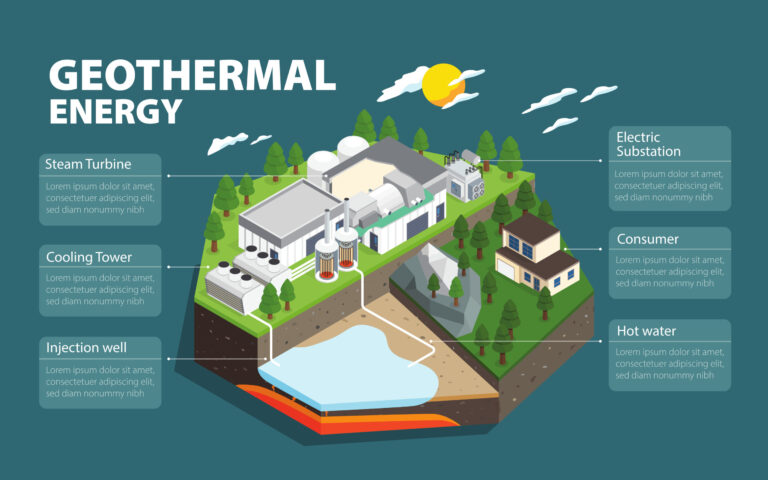
Robertson emphasized that the industry is no longer waiting for a single “winning” technology. Instead, the sector is assembling a broader geothermal toolbox: conventional hydrothermal resources where natural reservoirs are favorable; Enhanced Geothermal Systems (EGS) where permeability must be engineered; closed-loop concepts that circulate fluids through sealed systems; and more speculative frontiers such as supercritical and offshore geothermal resources.
- Technology Agnosticism: Different geological locations and end-users will require different technical solutions. The goal is not for one specific approach to dominate, but for the entire geothermal sector to succeed globally.
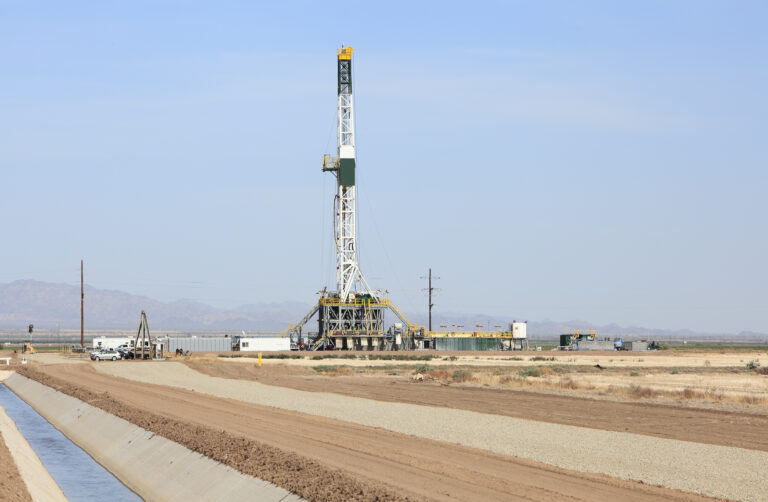
- Faster Drilling and Cost Reduction: Advancements in drilling speed from the oil and gas sector are dramatically reducing the capital-intensive upfront costs of geothermal projects, attracting significant new investment.
- The Utah FORGE Effect: Robertson pointed to Utah FORGE as an example of how public research infrastructure and shared geoscience learning can help reduce technical uncertainty, advance EGS technologies, and support broader private-sector deployment.
Policy as an Accelerator: De-risking Projects and Shortening Timelines
While technological innovation is crucial, Robertson stressed that advocacy and policy design have been just as important in creating the current momentum. In the United States, geothermal has benefited from an unusual degree of bipartisan support because it combines clean energy, domestic resource development, skilled labor, and energy-security arguments.
- Federal Funding: The U.S. Congress provided $150 million to the Department of Energy’s Geothermal Technologies Office in 2026, and previously announced over $171 million for testing, resource characterization, and confirmation drilling.
- Streamlining Permitting: Unpredictable permitting timelines are a major hurdle. To combat this, the U.S. House recently passed the Geothermal Energy Advancement Act with bipartisan support. Geothermal Rising supported provisions establishing a BLM geothermal ombudsman and permitting task force to help improve coordination and consistency across BLM offices.
- Categorical Exclusions: A key policy priority has been developing appropriate categorical exclusions for qualifying low-impact geothermal exploration activities, helping streamline early-stage work while maintaining appropriate environmental safeguards.
Japan and APAC: Turning Resource Potential into Bankable Projects
While Japan is often cited as having one of the world’s largest geothermal resource endowments, Robertson argued that resource potential alone is not enough. Potential lessons from the U.S. and other geothermal markets include reducing early-stage subsurface risk, creating more predictable permitting pathways, engaging communities early, and broadening geothermal’s value proposition beyond electricity generation.
- Reduce Exploration Risk: Government support can help address the significant upfront capital risk of exploration. Publicly supported resource mapping, drilling programs, and data-sharing can help unlock private investment.
- Create Predictable Permitting Pathways: Clear permitting roadmaps can help developers, investors, and communities understand which agencies are responsible, what information is required, and what realistic timelines look like.
- Engage Communities Early: In a country where hot spring (onsen) culture is deeply ingrained, developers cannot wait until project designs are complete to talk to locals. Early, meaningful engagement with local governments and hot spring operators is essential to prevent backlash and build symbiotic relationships.
- Think Beyond Electricity: Geothermal value extends into district heating, industrial applications, greenhouses, and mineral recovery (such as lithium). Robertson cited Iceland as the ultimate model, where geothermal initially started as a way to lower home heating costs and eventually blossomed into a thriving, multi-use economic ecosystem.
The Workforce Constraint: Building the Skills Base for Scale
A major bottleneck facing the global geothermal industry is a shortage of specialized human capital. The sector needs not only geoscientists and reservoir engineers, but also drilling crews, construction workers, electricians, welders, and field operators who can translate subsurface concepts into operating projects.
- Transitioning Oil and Gas Talent: Robertson noted that many oil and gas workers already possess skills that are highly transferable to geothermal operations. With targeted retraining, rig crews, drilling specialists, and field technicians can move into geothermal projects far faster than building an entirely new workforce from scratch.
- Focusing on the Trades: While reservoir engineers and geologists are needed, the industry has a growing need for drillers, welders, electricians, and construction workers. Robertson stressed the importance of promoting high-paying trade jobs that do not require expensive four-year college degrees.
- Inspiring Youth: To support the industry’s future, one of Robertson’s education priorities for 2027 is to expand outreach into middle and high schools. By highlighting geothermal’s role in energy reliability, innovation, skilled careers, and clean energy, the industry can introduce a younger generation to opportunities in the sector.
The Strategic Endgame: Geothermal as Long-Term Energy Infrastructure
Robertson’s insights point to a geothermal sector that is no longer defined only by resource abundance, but by execution capability. The next phase will depend on whether governments can de-risk exploration, whether regulators can create predictable permitting pathways, whether developers can earn community trust, and whether the industry can mobilize a workforce large enough to build at scale.
For Japan and the wider APAC region, the opportunity is especially consequential. Geothermal is not merely another renewable option; it is a domestic, firm, and multipurpose energy resource that can support electricity generation, heat use, industrial applications, and regional economic development. Unlocking that potential will require a shift from viewing geothermal as a site-specific power project to treating it as long-term national infrastructure.
As demand for 24/7 clean power accelerates, geothermal’s value proposition is becoming sharper: it can operate where reliability, land efficiency, and local resilience matter most. If policy, technology, finance, and community engagement move in concert, geothermal could become one of the defining energy platforms of the next industrial era.


Free Membership Registration
What You Can Do After Registering
All articles are available to read free of charge. Free membership registration is required to download reports.
- You can download all reports that we make available free of charge in the future.
- You can opt in to receive our newsletter (the launch date and frequency will be determined at a later date).

This is a Japanese-English bilingual media outlet specializing in geothermal energy, operated by GeoVanguard Energy Inc. Information from Japan tends to stay within Japanese, while overseas information does not reach Japan. Our purpose is to bridge that gap.