Next-Generation Technologies
Drilling Beyond the Limits of Conventional Geothermal
SHARE


How Quaise Energy plans to combine millimeter-wave drilling, superhot engineered reservoirs, and international industrial partnerships to make deep geothermal a globally scalable source of firm power
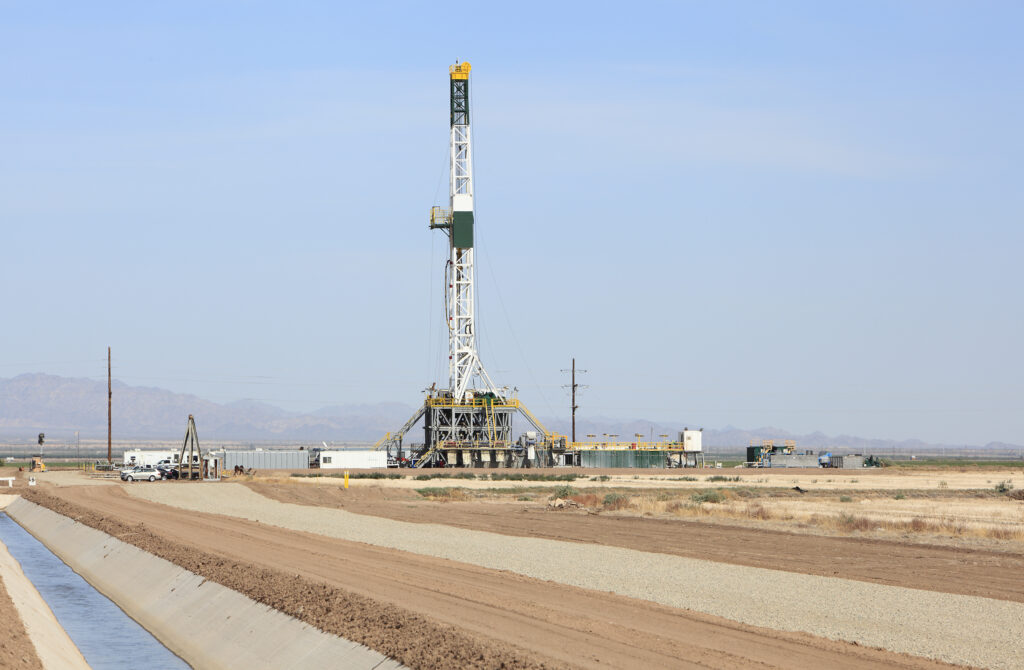
In an interview with GeoVanguard Intelligence, Harry Kelso, Senior Communications Manager, and Ryan Dean, Sr. Director, Strategic Communications and Public Affairs, of Quaise Energy outlined a deliberately staged strategy for commercializing superhot rock geothermal: prove the value of high-temperature engineered systems at a comparatively accessible U.S. site, validate millimeter-wave drilling under field conditions, and then combine the two capabilities as the company expands into deeper and more geographically diverse resources.
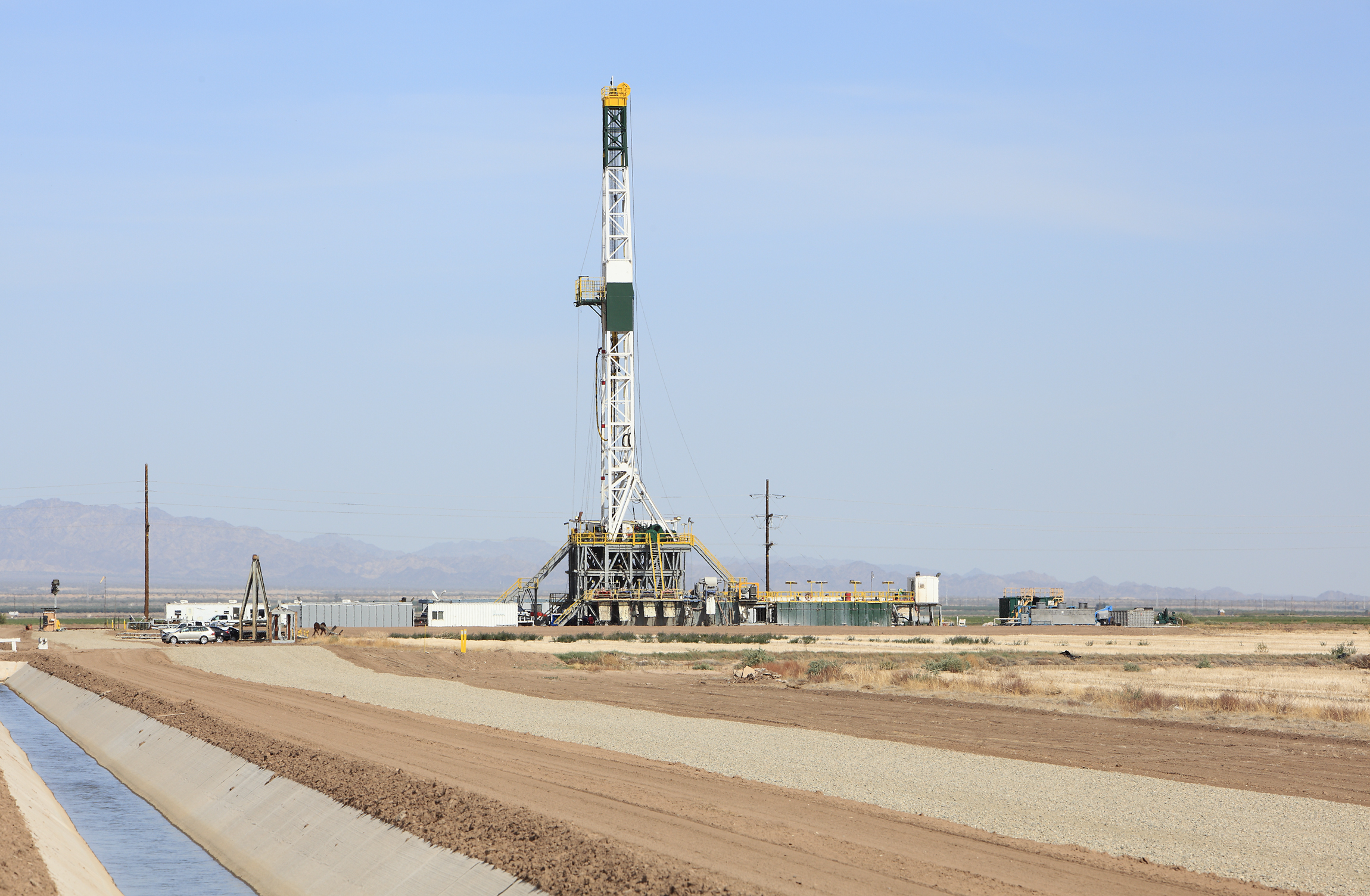
The proposition is ambitious. Quaise Energy aims to reach rock above 300°C—and ultimately beyond 400°C—at depths where drilling using conventional technology become progressively slower and more expensive. If the approach succeeds, the company argues that geothermal could move beyond its traditional dependence on rare, naturally permeable reservoirs and become a widely deployable source of clean, continuous electricity.
The interview also clarified an important distinction in the company’s development program. Quaise Energy is not waiting for its novel drilling technology to be fully commercial before demonstrating superhot power production. Its first commercial project, Project Obsidian in Oregon, is designed to access high temperatures initially with conventional drilling. In parallel, a Texas field program is advancing the millimeter-wave system toward deeper, larger-diameter applications.
That separation of technical risks is central to Quaise Energy’s strategy—and highly relevant to Japan. The company already has investors and collaborators in the country, including relationships with Mitsubishi Corporation, Idemitsu, JERA, and gyrotron developer Kyoto Fusioneering. Although no Japanese project has yet been announced, Quaise Energy sees Japan as a credible future market where geological expertise, advanced manufacturing, and growing policy support could converge.
Contents
A Two-Part Technology Thesis: Hotter and Deeper
Quaise Energy defines its differentiation through two linked objectives. The first is to produce electricity from geothermal resources in the supercritical, or superhot, regime. The second is to drill far deeper than the practical economic limit of today’s oil-and-gas equipment.
According to the company, raising reservoir temperature can transform the output of an individual well. “We’re going to higher temperatures for geothermal into the supercritical state,” Senior Communications Manager Harry Kelso said, adding that such conditions could generate “up to 10 times more power per well.” The attraction is not simply a hotter resource, but a potential step change in energy density and project economics.
Access is the harder problem. Temperatures above 300°C may exist at relatively shallow depths in volcanic regions, but across much of the world they lie several kilometers below the surface, often beneath hard crystalline basement rock. Quaise Energy’s answer is a millimeter-wave drilling system intended to reach beyond five or ten kilometers and, over time, toward far greater depths. The company’s long-range premise is that sufficiently deep access would make high-temperature geothermal possible across a much larger share of the world.
The underlying mechanism resembles dielectric heating in a microwave oven. Instead of mechanically cutting rock, the system transmits electromagnetic energy that heats and breaks down the formation. Because the energy is delivered without a conventional bit grinding continuously against the rock face, the approach is designed to avoid the rapid bit wear and repeated trips that make deep drilling through crystalline formations costly.
Quaise Energy emphasized that the technology addresses both hardness and temperature. At depth, those challenges tend to arrive together: hotter formations are frequently located in the crystalline basement where conventional tools are less efficient. The downhole configuration of millimeter wave drilling is intended to remain comparatively simple, while purge gas removes material from the borehole rather than relying on the conventional drilling-mud system described in the interview.
This does not mean conventional drilling disappears. Quaise Energy envisions a hybrid workflow at commercial projects: standard equipment drills through the upper sedimentary section, where it is already optimized and economical; the millimeter-wave module is introduced only when conventional performance deteriorates in deeper basement rock. The company intends the system to be “plug and play” with existing drilling rigs, a design choice that could allow it to leverage established drilling infrastructure rather than build an entirely new industrial platform.
From Quarry Trials to Commercial Power in Oregon
Quaise Energy is pursuing two related but distinct U.S. programs. Near Austin, Texas, the company has moved its millimeter-wave technology from laboratory testing into a granite quarry. At the time of the interview, the team was actively drilling toward a depth of approximately 1,000 meters. The trial is intended to demonstrate performance in a relevant field environment and to establish that the system can operate outside controlled laboratory conditions.
Kelso said the field results had been encouraging, noting that the system was performing better under real-world conditions than it had in the laboratory. After the 1,000-meter milestone, the next objective is to integrate a higher-power gyrotron—the source that generates the millimeter-wave beam—that can achieve boreholes of commercial dimensions.
The second program is Project Obsidian, Quaise Energy’s first commercial site, on the flanks of Newberry Volcano in central Oregon. The geology offers an unusual advantage: the company expects to encounter temperatures of roughly 300°C to 400°C at depths that remain accessible with conventional drilling, around 15,000 feet, according to the interview.
Project Obsidian is therefore not a conventional hydrothermal development, nor is it initially dependent on millimeter-wave drilling. It is planned as an engineered geothermal system in which wells and reservoir engineering are used to create a productive subsurface heat-exchange system. Conventional rigs can reach the target interval for the early wells, allowing Quaise Energy to demonstratesuperhot reservoir operation without simultaneously making the commercial project depend on an unproven deep-drilling method.
Senior Director for Strategic Communications and Public Affairs Ryan Dean described a phased plan. A confirmation well is intended to verify the geological assumptions, support early testing, and establish monitoring for later wells. Quaise Energy then plans an initial set of wells targeting approximately 300°C, followed in subsequent years by deeper wells intended to exceed 400°C.
The commercial target is a 50-megawatt generating facility by 2030, with the potential to expand the site to 250 megawatts and, subject to performance, possibly toward one gigawatt. Millimeter-wave drilling could later be introduced for subsequent wells, reach hotter formations, and increase the energy available from the site.
This sequencing is more than project management. It is a commercialization philosophy. By beginning where superhot conditions are comparatively shallow, Quaise Energy can learn how to construct and operate an engineered reservoir at extreme temperature while its drilling platform matures separately. The company can then combine those capabilities at later sites where the resource is deeper. In an industry where subsurface risk, technology risk, and capital intensity compound one another, separating them may be as important as solving them.
Japan’s Role: Investor, Supplier, and Future Host Market
Japan already occupies several positions in the Quaise Energy ecosystem. The company referred to relationships with Mitsubishi Corporation, Idemitsu, and JERA, describing Japan as a country where it has built a meaningful network of investors and collaborators. Those relationships provide more than capital: they create channels into a sophisticated energy market, established project-development organizations, and globally competitive equipment suppliers.
The collaboration with Kyoto Fusioneering is particularly illustrative. Gyrotrons are highly specialized devices, with only a small number of manufacturers worldwide. Kyoto Fusioneering emerged from the fusion-technology sector and is developing a gyrotron system for Quaise Energy. For a supplier whose core market has traditionally been tied to the long development horizons of fusion energy, geothermal offers an adjacent commercial application for high-power millimeter-wave expertise.
The relationship also demonstrates how next-generation geothermal can draw on capabilities developed outside the conventional geothermal supply chain. Deep drilling, high-temperature power conversion, advanced materials, subsurface imaging, and electromagnetic systems are all cross-sector disciplines. Japan’s industrial base is well positioned across several of them.
For Japanese companies, collaboration need not begin with a domestic power project. Near-term opportunities may include gyrotron development, high-temperature components, power-generation equipment, engineering support, project investment, and joint studies of prospective resources. Participation in U.S. demonstrations could also provide operating data and commercial experience before a Japanese field deployment is selected.
Quaise Energy nevertheless made clear that Japan is on its project radar. “We do want to do a project in Japan at some point,” Kelso said, while emphasizing that there were no concrete plans at the time of the interview. The company is examining possibilities with Mitsubishi and other partners and views recent Japanese policy and legislative support for supercritical and superhot geothermal as encouraging.
Japan’s geology does not invalidate the technology thesis, but it does reinforce the need for disciplined site characterization. Dean explained that entering any new geography requires an investigation of existing subsurface knowledge, followed where necessary by confirmation or test wells. The initial model must be validated against local geology before a reservoir design is finalized. In that sense, Japan would not be treated as an exception: difficult geology exists in every market, and the development process must be evidence-led.
Japan could also serve as a valuable proving ground for the broader claim that engineered geothermal can operate beyond conventional resource settings. The country combines abundant subsurface heat, demanding geological conditions, a need for dependable low-carbon generation, and a concentration of companies capable of manufacturing complex energy equipment. If those assets are connected effectively, Japan could become not merely an importing market for Quaise Energy’s technology but a co-development base for the global industry.
A Platform for Markets Beyond the United States
Quaise Energy’s international ambition follows directly from the architecture of its technology. If a portable millimeter-wave module can be integrated with standard drilling rigs, and if engineered reservoirs can be created in hot crystalline rock, future projects would be less dependent on the narrow geography of conventional hydrothermal resources. The addressable market would then be defined increasingly by achievable depth, temperature, infrastructure, and project economics rather than by the presence of a naturally productive field.
That vision, however, will be earned sequentially. The Texas trial must demonstrate scalable drilling performance. Project Obsidian must establish that superhot engineered systems can be developed, monitored, and operated commercially. Higher-power gyrotrons must support larger boreholes. Reservoir designs, casing and completion systems, and surface equipment must withstand extreme conditions. Each step supplies evidence needed for the next one.
The business model will also depend on localization. A project in Japan, the eastern United States, or another market cannot simply reproduce an Oregon design. Quaise Energy expects to begin with available geological data, identify what is known and what remains uncertain, and use targeted drilling to close the gap. That process places a premium on local partners with subsurface knowledge, permitting experience, stakeholder relationships, and access to supply chains.
For markets seeking firm low-carbon capacity, the prize is substantial. Deep geothermal could provide continuous generation with a compact surface footprint and without fuel-price exposure. It could complement variable renewables, support industrial demand, and potentially reuse parts of the drilling workforce and service infrastructure developed by the oil and gas sector. Quaise Energy’s concept is therefore not only a drilling innovation; it is an attempt to convert subsurface heat into an infrastructure class that can be repeated across regions.
The strongest early markets are likely to be those where several conditions overlap: high-value demand for round-the-clock electricity, supportive public policy, accessible drilling and grid infrastructure, credible subsurface data, and industrial partners willing to participate before the technology is fully mature. Japan meets many of those criteria, even if its eventual deployment pathway will require careful geological and commercial adaptation.
The Strategic Significance of a Staged Approach
The most revealing aspect of Quaise Energy’s strategy is its refusal to make every innovation succeed at once. Project Obsidian can validate superhot EGS using conventional drilling at first. The Texas program can mature the millimeter-wave tool independently. Japanese suppliers can strengthen critical components and manufacturing capability. Later projects can combine those elements as technical confidence grows.
This approach reduces the danger of treating deep geothermal as a single heroic technology bet. Instead, it becomes a portfolio of linked engineering and commercialization problems: how to drill efficiently through hard rock, how to construct productive engineered reservoirs, how to operate at extreme temperature, and how to assemble financing and supply chains around a replicable project model.
The uncertainties remain material. The interview described targets and development plans, not completed commercial proof. The performance of millimeter-wave drilling at greater depth and commercial diameter, the durability of high-temperature well systems, reservoir productivity, and the economics of repeat deployment still require validation. International expansion will also depend on regulatory frameworks, local acceptance, and site-specific geology.
Yet the opportunity is equally clear. A successful 50-megawatt facility in Oregon would give the market a reference project for superhot engineered geothermal. A commercially viable millimeter-wave system would extend that model into regions where heat is abundant but too deep for conventional economics. Together, those achievements could shift geothermal from a resource available mainly in exceptional locations to an energy option considered across much of the world.
Conclusion: From Deep Heat to a Global Industrial System
Quaise Energy is attempting to solve one of geothermal power’s defining constraints: not the availability of heat, but the ability to reach it economically and convert it into repeatable projects. Its answer combines high-temperature engineered reservoirs with a drilling method borrowed conceptually from electromagnetic heating and designed for the hard, hot formations where conventional tools lose efficiency.
The company’s U.S. program provides the first test of that thesis. Texas is the proving ground for millimeter-wave drilling; Oregon is the proving ground for commercial superhot EGS. Their eventual integration would create the blueprint Quaise Energy hopes to carry into deeper resources and new geographies.
Japan has a plausible role at every stage of this development. Its corporations can invest and develop projects. Its manufacturers can supply gyrotrons and other high-temperature systems. Its geoscientists and engineers can help adapt the concept to complex volcanic and crystalline settings. And, if policy momentum is sustained and an appropriate site is identified, the country could host a future project that demonstrates the technology under conditions of global relevance.
No concrete Japanese development has been committed, and important technical milestones remain ahead. But the existing network of Japanese partners, the Kyoto Fusioneering collaboration, and Quaise Energy’s explicit interest in the market create a foundation for substantive engagement now—not only after the Oregon plant is operating.
For the wider geothermal sector, the central question is whether Quaise Energy can turn a sequence of demonstrations into a standardized industrial system. If it can, the significance will extend far beyond a single drilling tool or power plant. It would offer a route to bring the deep heat beneath many regions into the energy economy—and give countries such as Japan a new way to combine domestic resources, industrial capability, and firm low-carbon power.
This article is based on an interview conducted by GeoVanguard Intelligence with Harry Kelso, Senior Communications Manager, and Ryan Dean, Sr. Director, Strategic Communications and Public Affairs, of Quaise Energy on October 7, 2026. Statements concerning future milestones, capacity, schedules, and market expansion reflect the company’s plans and expectations at the time of the interview.


Free Membership Registration
What You Can Do After Registering
All articles are available to read free of charge. Free membership registration is required to download reports.
- You can download all reports that we make available free of charge in the future.
- You can opt in to receive our newsletter (the launch date and frequency will be determined at a later date).

This is a Japanese-English bilingual media outlet specializing in geothermal energy, operated by GeoVanguard Energy Inc. Information from Japan tends to stay within Japanese, while overseas information does not reach Japan. Our purpose is to bridge that gap.